Govt looks to tighten law on manual scavenging with longer jail term

Currently, engaging any person for hazardous cleaning of sewers and septic tanks by any person or agency is punishable with imprisonment of up to five years or a fine up of to Rs 5 lakh or both
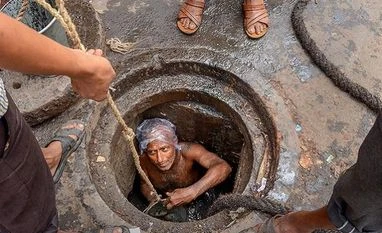
sewage, manual scavenging
The amendment bill comes amid increasing number of deaths during cleaning and maintenance of sewers in the country.
Press Trust of India New Delhi
2 min read Last Updated : Sep 12 2020 | 4:06 PM IST
The government plans to make the law banning manual scavenging more stringent by introducing a bill in the Monsoon Session of Parliament, which is scheduled to begin from Monday.

The Prohibition of Employment as Manual Scavengers and their Rehabilitation (Amendment) Bill, 2020, also proposes to completely mechanise sewer cleaning and provide better protection at work and compensation in case of accidents, officials said.

Currently, engaging any person for hazardous cleaning of sewers and septic tanks by any person or agency is punishable with imprisonment of up to five years or a fine up of to Rs 5 lakh or both.

The bill proposes to make the law banning manual scavenging more stringent by increasing the imprisonment term and the fine amount, the officials said.

The bill is among the 23 bills to be tabled in Parliament during the Monsoon Session.

The amendment bill comes amid increasing number of deaths during cleaning and maintenance of sewers in the country.

The Prohibition of Employment as Manual Scavengers and their Rehabilitation Act, 2013 prohibits construction or maintenance of insanitary latrines, and employment of any person for manual scavenging or hazardous cleaning of sewers and septic tanks.

The bill comes under the Social Justice and Empowerment Ministry's National Action Plan which aims at complete elimination of hazardous cleaning of sewers and septic tanks, a more serious, stringent and focused strategy framework.

The plan aims to modernise existing sewage system and coverage of non-sewered areas; setting up of faecal sludge and septage management system for mechanised cleaning of septic tanks, transportation and treatment of faecal sludge; equipping the municipalities, and setting up of Sanitation Response Units with help lines, according to a document by the Ministry of Social Justice and Empowerment.

One subscription. Two world-class reads.

Already subscribed? Log in

Subscribe to read the full story →
*Subscribe to Business Standard digital and get complimentary access to The New York Times

Smart Quarterly

₹900

3 Months

₹300/Month

SAVE 25%

Smart Essential

₹2,700

1 Year

₹225/Month

SAVE 46%
*Complimentary New York Times access for the 2nd year will be given after 12 months

Super Saver

₹3,900

2 Years

₹162/Month

Subscribe

Renews automatically, cancel anytime

Here’s what’s included in our digital subscription plans

Exclusive premium stories online

  • Over 30 premium stories daily, handpicked by our editors

Complimentary Access to The New York Times

  • News, Games, Cooking, Audio, Wirecutter & The Athletic

Business Standard Epaper

  • Digital replica of our daily newspaper — with options to read, save, and share

Curated Newsletters

  • Insights on markets, finance, politics, tech, and more delivered to your inbox

Market Analysis & Investment Insights

  • In-depth market analysis & insights with access to The Smart Investor

Archives

  • Repository of articles and publications dating back to 1997

Ad-free Reading

  • Uninterrupted reading experience with no advertisements

Seamless Access Across All Devices

  • Access Business Standard across devices — mobile, tablet, or PC, via web or app

Topics :Centremanual scavengingMonsoon session of Parliamentprison

Next Story




