Home / India News / How can govt say Food Security Act has no link to poverty alleviation: HC
How can govt say Food Security Act has no link to poverty alleviation: HC
Delhi HC asked the Centre how it can say that the National Food Security Act has no link with poverty alleviation as the object behind the statute was to ensure food security for the poor
The Delhi High Court on Thursday asked the Centre as to how it can say that the National Food Security Act (NFSA) has no link with poverty alleviation as the object behind the statute was to ensure food security for the poor.
"Food security is needed for the poor, so how can you say it (NFSA) is de-linked from poverty," a bench of Chief Justice D N Patel and Justice Prateek Jalan asked the Ministry of Consumer Affairs while hearing a PIL for providing benefits of the various food security schemes to persons with disabilities (PWDs).
Replying to the PIL, the ministry contended that NFSA has no link with poverty alleviation and its goal is to ensure food security for 67 per cent of the country's population.
The ministry, represented by central government standing counsel Monika Arora, also said that Rights of Persons with Disabilities (RPWD) Act was not applicable to the NFSA as under the food security law foodgrain was being provided to 67 per cent of the population which included PWD and therefore, there was no need for a 5 per cent reservation for them.
"We need food security because we are poor," the bench said, adding that the government cannot say it will not provide reservation to PWD merely on the basis that they have not been excluded under NFSA.
"The purpose of reservation was to give preferential treatment. Where is the preferential treatment here? You (Centre) are presuming that it is as easy for a PWD to get a ration card as it is for anyone else. You are not considering the reality (with regard to the plight of PWD) in the country that we live in," the court said.
The bench further said that disability certificates are issued by government authorities and asked the Centre and state governments to consider giving foodgrain to the PWD initially based on their disability certificates and at the same time collecting their information for issue of a ration card.
Thereafter, they can be given the ration card along with the foodgrain, the bench said.
With the suggestion, the court listed the matter for hearing on August 24.
The suggestion was given by the court earlier as well, on July 22, to the central government which was asked to look into its feasibility.
However, the central government on the subsequent date of hearing on July 29 did not say anything on the suggestion.
During the hearing on Thursday, senior advocate Santosh Kumar Rungta, appearing for the NGO which has filed the PIL, said that the Consumer Affairs Minister had recently tweeted and also issued a press release saying that PWD would be provided foodgrain without insisting on ration cards and directions to this effect have been issued to all state governments.
The NGO, National Federation of Blind, in its petition has sought directions to the Centre to ensure that states and Union Territories provide benefits of welfare schemes, like Pradhan Mantri Garib Anna Kalyan Yojana, to PWD also during the COVID-19 pandemic.
It has contended that PWDs are neglected when reliefs under various food security measures are implemented as most of them do not have ration cards.
The NGO has also contended that under the PWD Act of 1995, a 3 per cent reservation was provided for all disabled persons in poverty alleviation schemes and this was increased to 5 per cent under the RPWD Act of 2016.
Therefore, the government should ensure that at least 5 per cent of the beneficiaries for foodgrain under the schemes like, Antyodaya Anna Yojana and Pradhan Mantri Garib Anna Kalyan Yojana, are PWD, it has said.
The bench had earlier remarked that PWD have been excluded from welfare schemes "from time immemorial".
"Fact that persons with disabilities get marginalised from every scheme does not require a debate," it had said.
(Only the headline and picture of this report may have been reworked by the Business Standard staff; the rest of the content is auto-generated from a syndicated feed.)

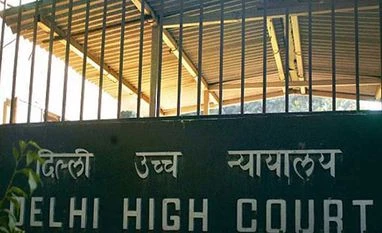 "How can govt say Food Security Act has no link to poverty alleviation: HC")


 Connect with us on WhatsApp