Important for nations to fulfil their pre-2020 green commitments: Javadekar
Javadekar on Tuesday stressed that the idea of climate action should not be to move the climate ambition goal post to 2050 and it is important for countries to fulfil their pre-2020 commitments
Press Trust of India New Delhi Union Environment MinisterPrakash Javadekar on Tuesday stressed that the idea of climate action should not be to move the climate ambition goal post to 2050 and it is important for countries to fulfil their pre-2020 commitments.
He was representing India at the United Nations Security Council Open Debate on "Addressing climate-related risks to international peace and security".
Javadekar said the United Nations Framework Convention on Climate Change (UNFCCC) and the Paris Agreement negotiated under the Framework are the central mechanisms for climate action in a nationally determined manner based on certain fundamental agreed principles, the foremost amongst which is Common but Differentiated Responsibility and Respective Capabilities.
The idea of climate action should not be to move the climate ambition goal post to 2050. It is important for countries to fulfil their pre-2020 commitments. Climate Action needs to go hand-in-hand with the framework for financial, technical and capacity building support to countries that need it, he said.
Citing the 2019 IPCC Special Report Climate Change and Land which says that extreme weather and climate or slow-onset events may lead to increased displacement, disrupted food chains, threatened livelihoods, and could contribute to exacerbated stresses for conflict, Javadekar put forward the point that even the best available science claims that climate change only exacerbates conflict and is not a reason for conflict and does not threaten peace and security.
While climate change does not directly or inherently cause violent conflict, its interaction with other social, political and economic factors can, nonetheless, exacerbate drivers of conflict and fragility and have negative impacts on peace, stability and security. Therefore it is for precisely this reason that developing countries' Nationally Determined Contributions under the Paris Agreement included information on adaptation activities, and the need for finance, technology development and transfer, capacity building, and transparency, said the Union Environment Minister.
Javadekar also reiterated that the commitment by developed countries to jointly mobilize USD 100 billion per year by 2020 in support of climate action in developing countries has not been realised.
He said there is an urgent need to promote and support the meaningful participation of women and marginalized groups in national-level climate change policy and planning processes.
The impacts of climate change and its associated security risks have important gender dimensions. Women and girls experience the interplay between climate change and peace and security in direct and profound ways. Since women are often the providers of food, water and energy for their families they are likely to face increased challenges in accessing resources due to climate change.
As the primary caregivers, women are often living on the frontlines of climate change and have distinct knowledge and experience to contribute to building effective adaptation strategies. There is an urgent need to promote and support the meaningful participation of women and marginalized groups in national-level climate change policy and planning processes, he said.
On India's Climate Actions, Javadekar said India is the only country on track among the G20 nations to meet its climate change mitigation commitments.
We are not only meeting our Paris Agreement targets but will also exceed them, he said while highlighting the International Solar Alliance (ISA) and the Coalition for Disaster Resilience Infrastructure (CDRI), the two initiatives by India that have been launched to addressing challenges of climate change and adaptation.
Commenting on post COVID-19 recovery, Javadekar highlighted that India believes that there is a significant opportunity for countries to integrate low-carbon development in their COVID-19 rescue and recovery measures and long-term mitigation strategies that are scheduled to be announced for the reconvened 26th session of the Conference of the Parties (COP 26) in 2021.
(Only the headline and picture of this report may have been reworked by the Business Standard staff; the rest of the content is auto-generated from a syndicated feed.)

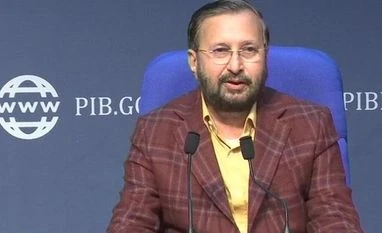 "Important for nations to fulfil their pre-2020 green commitments: Javadekar")


 Connect with us on WhatsApp