India is among the world's highest supporters for religious freedom, according to a new research that, however, found the country to be lagging behind on several measures of free expression including government censorship, competitive elections and internet freedom.
Nonpartisan fact tank US-based Pew Research — that surveyed 38 countries and interviewed 40,786 people between April 5 to May 21, 2015 - found 84 per cent of Americans saying that religious freedom is very important.
“Overall, this right is highly valued in the Asia-Pacific region as well, although there is a wide range of opinions, with more than eight-in-ten Pakistanis, Indians and Indonesians describing religious freedom as very important, compared with just 24 per cent in Japan, the lowest share among the countries surveyed," it said.
Noting that in India there is strong support for gender equality and religious freedom, Pew in its survey said the global median stood at 74 per cent. Overall, global publics oppose government censorship of the media, except in cases of national security. In India, 74 per cent say media organisations should be able to publish information about large political protests in the country.
Support for internet freedom in India (38%) is among the lowest of all countries polled. Even though internet freedom ranks last among the six broad democratic rights included on the survey, majorities in 32 of 38 countries nonetheless say it is important to live in a country where people can use the internet without government censorship.
Across the 38 nations, a median of 50 per cent believe it is very important to live in a country with an uncensored internet, it said.
A global median of 65 per cent say it is very important for women to have the same rights as men and in India, 71 per cent of those polled agree, the report said.
On the issue of equal rights for women, there are sharp differences between men and women in most of the countries in the study. In 24 nations, women are more likely than men to say it is very important for women to have equal rights.
"However, in India, there is no gender difference on this question," Pew said.
In India, 49 per cent believe it is very important to have honest, competitive elections with a choice of at least two political parties.
Elections are clearly considered a central component of democracy around the world, and among the 38 nations in the study, a median of 61 per cent agree.
Pew said overall, global publics oppose government censorship of the media, except in cases of national security.
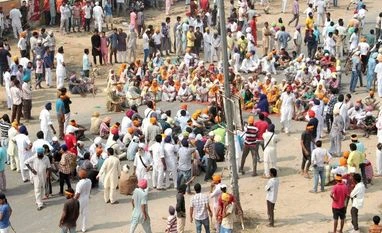
In India, 74 per cent say media organisations should be able to publish information about large political protests in the country.
Across the nations polled, a global median of 78 per cent also say this, the report said.

 "India among biggest supporters of religious freedom: Pew")

