China today remained non-committal on the issue of stopping road construction in Doklam, a day after Indian and Chinese troops ended 73-day standoff that was triggered by China's move to build a road in the border area.
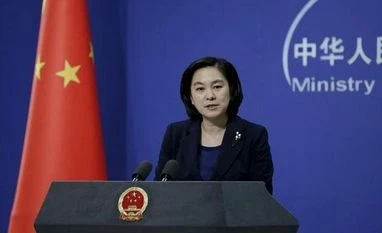
"In order to meet the needs of defending the borders, improving the living conditions, China has long engaged in infrastructure development including the road construction," Chinese Foreign Ministry spokesperson Hua Chunying said.
India and China yesterday ended their standoff in Doklam by withdrawing their troops from the area, just days before Prime Minister Narendra Modi's visit to China to attend the BRICS (Brazil, Russia, India, China and South Africa) summit.
When asked if China will continue with building the road in the area, Hua said, "we will take into consideration all relevant factors, including the weather, to make relevant construction plan in accordance with the situation on the ground."
Hua reiterated that Chinese border troops "will continue to station and patrol the Doklam area. We will continue to exercise our sovereignty with historic conventions."
She also parried a question whether China is in consultation with Bhutan, which has protested the Chinese troops' road building in Doklam.
"So far we have resolved the issue of illegal trespass of the Indian troops," she said.
When asked whether China halted the work on a road in Doklam to end the standoff so that the BRICS summit could be held, Hua said, "Peaceful resolution of the issue through the diplomatic channels serves the common interests of all relevant parties."
"It shows the sincerity and responsible attitude of China as a major country," Hua added.
Welcoming the end of the standoff, senior Chinese scholars said major lesson out of border tensions is that China and India should be sensitive towards each other's concerns to avert future conflicts.
"I am very glad to hear that finally the two governments demonstrated their maturity and far reaching and farsighted decision to peacefully end the conflict," Hu Shisheng, Director of the official China Institutes of Contemporary International Relations, told PTI.
Hu said China and India should be sensitive to each other's concerns.
Rong Ying, Vice President and Senior Research Fellow of the China Institute of the International Relations, which is affiliated to the Chinese Foreign Ministry, said the resolution of Dokalam standoff showed maturity and resilience of India-China bilateral relations.
"This is by far the most the serious incident between the two countries on the boundary. Ten weeks of very serious and grave situation. So the fact that both sides through the diplomatic means solved it in a peaceful (way), I think it should be definitely welcomed," said Rong, who served as a diplomat in the Chinese embassy in New Delhi.
(Only the headline and picture of this report may have been reworked by the Business Standard staff; the rest of the content is auto-generated from a syndicated feed.)

 "India-China faceoff over but Beijing non-committal on Doklam road construction")


 Connect with us on WhatsApp