India deports second group of Rohingyas to Myanmar; travel permits awaited

The government estimates that 40,000 Rohingya live in India in camps across the country
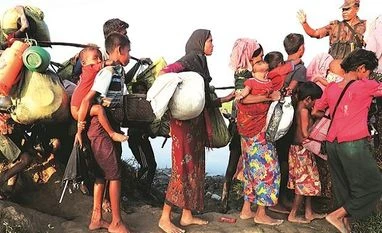
Rohingyas, Rohingya
The common cause attributed to the statelessness of Rohingyas under Myanmar's 1948 citizenship law and decades of persecution or conflict is generations-old ethnic animosity between migrant Bengali Muslims and native Buddhists. Photo: Reuters
Press Trust of India
Last Updated : Jan 03 2019 | 2:58 PM IST
Indian police on Thursday took a Rohingya Muslim family of five to the border by bus, readying to deport them to neighbouring Myanmar as the second such group expelled in four months during a crackdown on illegal immigrants.

India's Hindu nationalist government regards the Rohingya as illegal aliens and a security risk. It has ordered that tens of thousands of the community, who live in small settlements and slums, be identified and repatriated.

The husband, wife and three children comprising the family set to be expelled on Thursday had been arrested and jailed in northeastern Assam state in 2014 for entering India without valid documents, police said.

"These five people are now at the border gate in the adjoining Manipur state and we are waiting for Myanmar officials to hand them over formally," Bhaskar Jyoti Mahanta, Assam's additional director general of police, told Reuters.


Jails in Assam held 20 more Myanmar nationals, all arrested for illegal entry, he added. But it was not immediately clear if all were Rohingya, a largely stateless Muslim minority in Buddhist-majority Myanmar.

"We shall send them back to Myanmar once we get their travel permits from that country," Mahanta said. "Most of them sneaked into India in search of a livelihood."

India's first deportation of seven Rohingya men to Myanmar in October sparked fears of further repatriations among those sheltering in its refugee camps, and concern that those returned faced the risk of abuse at the hands of Myanmar authorities.

There has been no word on the fate of the deported men.


The government estimates that 40,000 Rohingya live in India in camps across the country, including the capital, New Delhi, having arrived over the years after fleeing violence and persecution in Myanmar, which denies them citizenship.

In August, a United Nations report accused the Myanmar military of committing mass killings and rapes on the Rohingya with "genocidal intent" in 2017 in an operation that drove more than 700,000 of them to flee to neighbouring Bangladesh.

Myanmar has denied the charges, saying its military launched a counter-insurgency operation after attacks on security posts by Muslim militants in August last year.

One subscription. Two world-class reads.

Already subscribed? Log in

Subscribe to read the full story →
*Subscribe to Business Standard digital and get complimentary access to The New York Times

Smart Quarterly

₹900

3 Months

₹300/Month

SAVE 25%

Smart Essential

₹2,700

1 Year

₹225/Month

SAVE 46%
*Complimentary New York Times access for the 2nd year will be given after 12 months

Super Saver

₹3,900

2 Years

₹162/Month

Subscribe

Renews automatically, cancel anytime

Here’s what’s included in our digital subscription plans

Exclusive premium stories online

  • Over 30 premium stories daily, handpicked by our editors

Complimentary Access to The New York Times

  • News, Games, Cooking, Audio, Wirecutter & The Athletic

Business Standard Epaper

  • Digital replica of our daily newspaper — with options to read, save, and share

Curated Newsletters

  • Insights on markets, finance, politics, tech, and more delivered to your inbox

Market Analysis & Investment Insights

  • In-depth market analysis & insights with access to The Smart Investor

Archives

  • Repository of articles and publications dating back to 1997

Ad-free Reading

  • Uninterrupted reading experience with no advertisements

Seamless Access Across All Devices

  • Access Business Standard across devices — mobile, tablet, or PC, via web or app

Next Story



