India leads global consumer confidence in Q3: Nielsen
This is the second straight quarter for India on the top, Nielsen said
BS Reporter Mumbai Despite being two points down, India still led global consumer confidence in the July-September quarter, market research company Nielsen said, issuing its quarterly consumer confidence index on Wednesday.
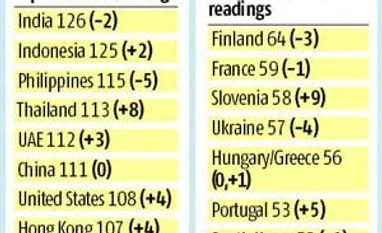
India topped the list with a score of 126 in the third quarter followed by Indonesia (125) and the Philippines (115), Nielsen said. This is the second straight quarter for India at the top, the insights and information company pointed out, after the country’s seven-point jump in the April-June quarter. Back then, India topped the list after five quarters with a score of 128.
In the latest survey, conducted online, over four in five (82 per cent) urban Indian respondents indicated the highest levels of optimism globally on job prospects in the next 12 months, followed by Indonesia and China, Nielsen said.
“In India, overall, the confidence index continues to hold near its previous levels with the euphoria around the recently elected government settling down,” said Piyush Mathur, president, Nielsen India Region.
“The consumer in India is in the middle of a festival season, and so spending will likely be higher than previous quarters due to gifting and entertaining. Besides traditional offline retailers, e-commerce is gaining traction for the urban affluent shoppers in India and online retailers have been spurring the market with discounts to fuel this movement. The actual impact of this on consumer spending might be more evident towards the end of the year.”
Nielsen’s survey does indicate that people are willing to spend more on discretionary products, with three in five online respondents saying this (as in, the festival season) was a good time to buy things they wanted and needed.
When it came to investing spare cash, three in five (61 per cent) urban respondents in India said they would put their money into savings, while 44 per cent of those polled were looking to invest in new technology. Nearly a third (28 per cent) indicated they would invest in a retirement fund, while over a third preferred mutual funds.
While consumer spending had improved, 78 per cent of Indian respondents, Nielsen said, had changed their spending habits in the third quarter, with the top four avenues for saving being spending less on gas and electricity (49 per cent), new clothes (43 per cent) and cutting down on telephone expenses (38 per cent) and holidays and vacations (37 per cent).
In the April-June quarter, 75 per cent of Indian respondents had changed their spending habits, with the top three avenues for saving being spending less on new clothes (46 per cent), gas and electricity (44 per cent) and holidays and vacations (35 per cent).

 "India leads global consumer confidence in Q3: Nielsen")


 Connect with us on WhatsApp