India's satellite for the South Asian Association for Regional Cooperation (SAARC) Region is expected to be on the space by end of 2016. Prime Minister Narendra Modi last year asked the Indian Space Research Organsiation (Isro) to develop a satellite, which India can gift to the neighbours.
In his address to the Sri Lankan Parliament today, the Prime Minister Narendra Modi said: "Sri Lanka will take full benefit of India's satellite for the SAARC Region. This should be in Space by December 2016".
In June 2014, the Prime Minister asked ISRO to develop a SAARC satellite, which can be dedicated as a ‘gift’ to the neighbours. He asked the scientists to work on a satellite that would provide full range of applications and services to all of India’s neighbours.
“Such a satellite will be helpful in SAARC nations’ fight against poverty and illiteracy, the challenge to progress in scientific field, and will open up avenues to provide opportunities to the youth of SAARC countries,” he said adding that such a satellite will be useful for the development of all SAARC nations with India playing a key role in that.
Till date, only two SAARC countries - India and Pakistan - have sent satellites in space, but several others are trying to follow.
According to reports, amongst the SAARC countriies, India got the maximum number of satellites operating in various orbits. According to SpaceReview.com, Pakistan's first indigenously developed satellite was launched from China on July 16, 1990. This satellite is no longer operational. Pakistan’s second satellite, BADR-B, an Earth observation spacecraft, was launched on December 10, 2001. Subsequently, Paksat 1, its first geostationary satellite, was acquired in 2002. China launched Paksat-1R, a communication satellite for Pakistan, on August 12, 2011. In November 2013, a CubeSat called iCUBE-1 was launched in a polar orbit to take low-resolution images of the planet.

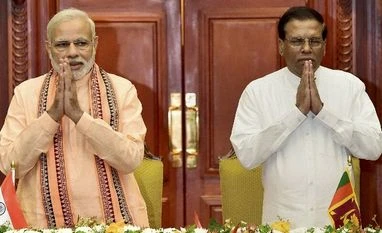 "India's satellite 'gift' for SAARC to be up in Dec 2016")


 Connect with us on WhatsApp