
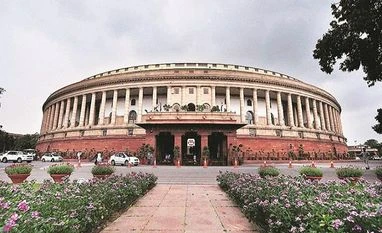
 "LS: Bill on linking electoral rolls with Aadhaar listed for introduction")


A bill on electoral reforms which seeks to link electoral rolls with the Aadhaar ecosystem to weed out duplicacy, is listed for introduction in Lok Sabha on Monday.
The Election Laws (Amendment) Bill, 2021 seeks to allow electoral registration officers to seek Aadhaar number of people who want to register as voters "for the purpose of establishing the identity".
It also seeks to allow the electoral registration officers to ask for Aadhaar number from "persons already included in the electoral roll for the purposes of authentication of entries in electoral roll, and to identify registration of name of the same person in the electoral roll of more than one constituency or more than once in the same constituency".
At the same time, the amendment bill makes it clear that "no application for inclusion of name in the electoral roll shall be denied and no entries in the electoral roll shall be deleted for inability of an individual to furnish or intimate Aadhaar number due to such sufficient cause as may be prescribed".
Such people will be allowed to furnish other alternative documents as may be prescribed.
According to the bill circulated to Lok Sabha members ahead of its introduction, various sections of the Representation of the People Act, 1950 and 1951 will be amended.
The Statement of Objects and Reasons of the bill states that Section 23 of the RP Act, 1950 will be amended to allow linking of electoral roll data with the Aadhaar ecosystem "to curb the menace of multiple enrolment of the same person in different places".
Amendment to section 14 of the RP Act, 1950 will allow to have four "qualifying" dates for eligible people to register as voters.
As of now, January 1 of every year is the sole qualifying date.
People who turn 18 on or before January 1 can register as voters. Those turning 18 after that have to wait for one whole year to register as voters.
Now, "the 1st day of January, 1st day of April, 1st day of July and 1st day of October in a calendar year" will be the qualifying dates in relation to the preparation or revision of electoral rolls.
Amendment to section 20 of the RP Act, 1950 and section 60 of the RP Act, 1951 will allow the elections become gender neutral for service voters.
The amendment will also help replace the word "wife" with the word "spouse" making the statutes "gender neutral".
An Armyman's wife is entitled to be enrolled as a service voter, but a woman Army officer's husband is not, according to provisions in the electoral law. With "wife" being replaced by the term "spouse", this will change.
(Only the headline and picture of this report may have been reworked by the Business Standard staff; the rest of the content is auto-generated from a syndicated feed.)