Maharashtra to issue ordinance against superstition
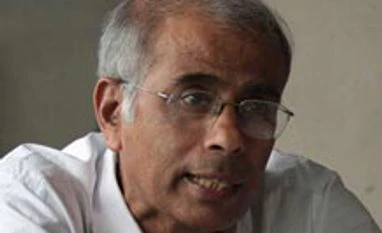
Chhagan Bhujbal demands security cover to be provided to Dabholkar's colleague and anti superstition activist Shyam Manav
BS Reporter Mumbai
Barely 27 hours after the murder of leading rationalist Narendra Dabholkar, the Maharashtra Cabinet on Wednesday took a decision to issue an ordinance against superstition, black magic and blind faith. Among other things, the law seeks to make it punishable for self-styled godmen to prey on people by offering rituals, charms, magical cures and propagating black magic.
At the Cabinet meeting chaired by Chief Minister Prithviraj Chavan, Public Works Minister Chhagan Bhujbal proposed an ordinance route in a serious bid to pacify a cross section of people, who had hit the roads across Maharashtra to protest against the broad daylight killing of Dabholkar on Tuesday in Pune by two unidentified persons. Bhujbal was supported by all cabinet colleagues. He also demanded security cover for Dabholkar's colleague and anti-superstition activist Shyam Manav.
A senior minister, who did not want to be identified, told Business Standard, “The ordinance would be promulgated after due consultations with the law and judiciary departments.”
He said the ordinance route could be adopted at this juncture as the winter session of the state legislature is slated to begin on December 9.
The Congress-led government could not take up the Bill during the recently-concluded monsoon session of the state legislature in view of reservations expressed by members of the treasury and opposition benches and also following opposition from various organisations including the Warkari community.
The Bill was passed by the state assembly in December 2005 and was later sent to the state council for its approval. However, following an heated debate, the Bill was referred to the joint committee of the state legislature. Subsequently, the Bill was lapsed after the new assembly came into existence after elections took place in 2009. Thereafter, the Bill in a new format was again moved in August 2011 in the state assembly but it never was discussed due to opposition.
Dabholkar's close associate recalled that the former had attended practically every session of the state legislature since 2003 to lobby for the passage of the Bill. Incidentally, the Bill had gone through several drafts and nearly 29 amendments.

 "Maharashtra to issue ordinance against superstition")


 Connect with us on WhatsApp