NEP paves way for top-200 global varsities to set up operations in India

Experts believe the National Education Policy 2020 is disruptive but are divided over its effectiveness
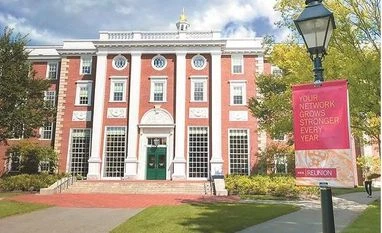
harvard university
Industry stakeholders believe that foreign universities will not rush into setting up campuses in India
Vinay Umarji Ahmedabad
4 min read Last Updated : Jul 29 2020 | 9:09 PM IST
With the Cabinet approving the National Education Policy (NEP) 2020, thereby ushering in reforms in Indian education sector, the move has paved way for foreign universities to set up operations in India. While higher education sector experts are unsure the immediate impact, allowing top 200 foreign universities to operate in India could raise standards of their Indian counterparts, many believe.

"Select universities (i.e. those from among the top 200 universities in the world) will be permitted to operate in India. A legislative framework facilitating such entry will be put in place, and such universities will have to follow all the regulatory, governance, and content norms applicable to Indian universities," the policy document states, among other things.

Industry representatives and experts alike believe the policy has been disruptive in many ways, prominent among which is establishing itself as an emerging destination for international students. However, experts like Narayanan Ramaswamy, Partner & Leader for Education & Skill Development Sector, KPMG India believe foreign universities should not treated the same way as Indian varsities but be allowed to operate with less hindrance. "Let the Harvards and MITs be Harvards and MITs in India and not become like their Indian counterparts," he advises.

The Ministry of Human Resource Development (MHRD), with its name changed to Ministry of Education under the NEP, itself admits that India stands at 26th rank when it comes to international students mobility. 

"Currently, while Indian students are increasingly travelling abroad for their studies, only approximately 45,000 (11,250 per year) international students study in Indian higher education institutions, making India the 26th ranked country among the top destinations for international student mobility," the NEP document, based on the K Kasturirangan Committee Report, states. 

This is now set to change with the ministry not only looking to open up India for foreign universities to set up operations, which could mean their campuses in but also encouraged its own universities to set up offshore campuses. 

"It is a very welcome move. There are multiple things in the policy that are game changers. Since the foreign participation is permitted only to top institutions, this will be ensure quality education and will raise the bar for everyone in India and Indian higher education institutions (HEIs) will have to compete with them. So national benchmarks will become global benchmarks," says Mohan Lakhamraju, Founder & CEO, Great Learning which is already bringing quality higher education through collaborations with Stanford, MIT, Northwestern University and University of Texas, Austin. 

With the Covid-19 vaccine still a long way to go, industry stakeholders believe that foreign universities will not rush into setting up campuses in India. But in the interim, collaborations with Indian counterparts could gain momentum.

"The new education policy which promises more autonomy and a path towards self governing entities coupled with the impetus given to internationalization should see more collaboration across national and international higher education establishments. If implemented well, this can spell higher levels of knowledge and research equilibrium for Indian HEIs vis-a-vis other higher ranked foreign institutions," says Prof (Dr.) Vishal Talwar, Dean-School of Management, BML Munjal University. 

For the first 4-5 years since the new education policy, collaborations with online education providers as well as Indian varsities by foreign universities will be more prolific. "All universities are facing the Covid aftermath and so no one will rush to set up campuses. However, this will boost more collaborations," says Lakhamraju who was waiting for the policy to be approved before launching a full-fledged degree program with Northwestern University of the US.

According to a report by Schoolguru Eduserve, a TeamLease group company, total online education enrolments to grow 33.6 per cent compounded annual growth rate (CAGR) to cross 21.2 million by 2022.

Globally, HEIs, especially business schools (B-schools) have been grappilng with a continual dip in applications even before the Covid pandemic. 

In such a scenario when aspiring candidates are concerned about employment opportunities outside India, foray of foreign varsities here could not only boost the economy but also make quality education affordable and increase return on investment (RoI) for students in India, says Prashant Tibrewal, founder and senior consultant of MBA admission consultant firm Admit Square. 

Meanwhile, Ramaswamy also believes that in the long run, the NEP will make studying in universities premium. "Education will become premium to go on to study in an university. Online will be normal," he says.

One subscription. Two world-class reads.

Already subscribed? Log in

Subscribe to read the full story →
*Subscribe to Business Standard digital and get complimentary access to The New York Times

Smart Quarterly

₹900

3 Months

₹300/Month

SAVE 25%

Smart Essential

₹2,700

1 Year

₹225/Month

SAVE 46%
*Complimentary New York Times access for the 2nd year will be given after 12 months

Super Saver

₹3,900

2 Years

₹162/Month

Subscribe

Renews automatically, cancel anytime

Here’s what’s included in our digital subscription plans

Exclusive premium stories online

  • Over 30 premium stories daily, handpicked by our editors

Complimentary Access to The New York Times

  • News, Games, Cooking, Audio, Wirecutter & The Athletic

Business Standard Epaper

  • Digital replica of our daily newspaper — with options to read, save, and share

Curated Newsletters

  • Insights on markets, finance, politics, tech, and more delivered to your inbox

Market Analysis & Investment Insights

  • In-depth market analysis & insights with access to The Smart Investor

Archives

  • Repository of articles and publications dating back to 1997

Ad-free Reading

  • Uninterrupted reading experience with no advertisements

Seamless Access Across All Devices

  • Access Business Standard across devices — mobile, tablet, or PC, via web or app

Topics :national education policyUniversityEducation policy

Next Story



