Success of mission will help us compete globally: K Radhakrishnan
Interview with Chairman, Isro
T E Narasimhan Chennai Koppillil Radhakrishnan and his team at the Indian Space Research Organisation (Isro) have made India proud by successfully launching Mars Orbiter Mission (MOM) in the red planet's orbit.
“Through your brilliance, and hard work, you have made it a habit of achieving the impossible,” said Prime Minister Narendra Modi, while congratulating the scientists.
Radhakrishnan, Isro chairman since 2009, has been credited with some of the major achievements — successful launching of Polar Satellite Launch Vehicle (PSLV), Geosychronous Satellite Launch Vehicle (GSLV), major communication and navigation satellites and now MOM.
The technocrat, who remains calm and composed even in the midst of high excitement, says he will continue to do his job with devotion. In his first interview, after the launch of MOM in Mars orbit, Radhakrishnan spoke to T E Narasimhan about the mission and the way forward. Edited excerpts:
To what reasons will you attribute the success of the mission? We have done our job with a single mind that the mission should be successful. Everything related to the mission was prepared well and worked well as we planned. It was the team work and the commitment which made the mission a success. We were also prepared for any contingency and was ready with alternative plans, if there were some trouble with the original plan.
How is the MOM doing now? The health of MOM is normal and all the related systems are working in a normal way. We have started receiving pictures taken by the on-board camera. MOM has sent five pictures (at the time the interview was taken) so far. We are having a look at those pictures now. There are five payloads in the spacecraft, which have distinct purposes. In the coming days, other four instruments will be also switched on and we are expecting more information to come through them.
What is the life of Mangalyaan? It would be about six months if you look at it, but might also go for a longer period than expected. We have around 40 kg of propellant in the spacecraft.
What are the key lessons from this mission? One big learning is our ability to calculate the Trans Mars Injection (TMI) and our ability to propagate and see what could be the arrival point has been quite successful. Our ability to understand the influence of the sun and other planets on the spacecraft as it travels through the heliocentric arc. The other one is precious determination of the position using the deep space station that we have.
At the time of Chandrayaan, we had spacecraft which can travel 0.4 million km. But here, we are looking at a spacecraft which had reached 227 million km (on September 24). We have upgraded our deep space stations for MOM and now we are clear and confident about its performance.
In the spacecraft, we have built several levels of autonomy. Most of these provisions have been exercised and are working. These autonomy will be useful if we adopt them for future communication and remote sensing satellites. We have passed several ground-based decision making to decision making by the satellite on board. If you have to take up a future good scientific mission, then certainly this is the direct learning for that. This mission is essentially a technology mission. It is to demonstrate our ability to orbit a spacecraft around Mars and the five scientific instruments we have put in are secondary ones.
The comet, Siding Spring (named after the Australian Siding Spring Observatory that had discovered it on January 3, 2013) is expected to pass through Mars’ orbit on October 19. Will it have any impact on MOM? The science team will meet on Friday to have a view on the details of it. (Kiran Kumar, scientist and associate director, Space Applications Centre, Ahmedabad, elaborated on the reply. Kumar was responsible for designing and building three of the orbiter payloads — the Mars colour camera, methane sensor and thermal infrared imaging spectrometer.) We are getting a unique opportunity on October 19, when comet Siding Spring’s tail is expected to touch the Mars atmosphere. This is a unique opportunity, as we can study the comet also.
Kiran Kumar is the Scientist and Associate Director, Space Applications Centre (SAC), Ahmedabad. He was responsible for designing and building three of the orbiter payloads - the Mars Colour Camera, Methane Sensor and Thermal Infrared Imaging Spectrometer.
When are you planning to set up joint Mars working group with NASA? During the prime minister's visit to the US, you will hear some news. Soon, you will see that happen.
Isro has proved its capability in space technology. How would it help its commercial arm, Antrix Corporation? Having conducted such a complex mission, our technology and capability has gone up globally. It will certainly help to compete globally. What we will do, needs to evolve now.

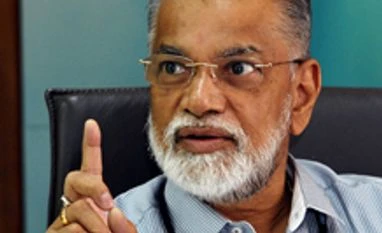 "Success of mission will help us compete globally: K Radhakrishnan")


 Connect with us on WhatsApp