Modi being treated like a rock star in US: Alan Krueger
Interview with former chairman, White House Council of Economic Addvisers
Sanjay Jog Mumbai Alan Krueger, former chairman of the White House Council of Economic Advisers, says India is in a stronger position to effectively tackle the taper tension. Terming Prime Minister Narendra Modi as a rock star, Krueger, who is Bendheim Professor of Economic and Public Affairs at Princeton University, India and US can further make their business relations stronger. In an interview with Sanjay Jog, Krueger bats for further stronger business relations between the US and India and also for opening up of multi brand retail by India. Edited excerpts:
With Federal Reserves indication that quantitive easing (QE) will end October. What is your take on its impact on India? QE led to greater investments in emerging markets including india. India weathered the Federal Reserve Chairman Ben Bernanke's announcement year ago about QE tapering or what is known as taper tension. In India, exchange rates fell but stabilized, reserves built up, CAD declined, inflation has moderated a bit. What matters most is structural reforms including removal of labour market distortions, promotion of more competition in product markets and embracing world trading system to a greater degree. Those factors will have a greater impact on India's economy than US monetary policy.
India is in a much stronger position today. Financial markets are forward looking and I think much of the adjustment has taken place.
Prime Minister Narendra Modi is visiting the US. How Modi's visit is crucial for both the countries to further strengthen trade and business relations? It is an exciting moment with Modi's election. It provides opportunity for a fresh start for US-India relations. I thinks Modi will find warm welcome when he comes to the US. Today, I read in the newspaper that his appearance at the Madison Square Garden has fully sold out. I would say he is being treated like a rock star in the US.
India has moved slowly to address concerns of Amercian businesses in terms of tax policy, localisation requirements, compulsory licensing requirements and I would describe that American businesses are cautiously optimistic so I hope that this opportunity is seized to strengthen US India business relations.
In general, America has benefited from its trade relations with India. Lot of services provided by Amercian businesses are done so quite cost effectively due to their ability to outsource to India. Quality of services has improved.
Is the time opportune for India to open up multi-brand retail? India's retail sector and agriculture sector are very inefficient. Delayed monsoon has affected agricultural prices. What you see in Kolkata is vegetable prices soared as infrastructure is not good for its delivery as they spoil on the way. Walmart is efficient in purchasing and delivery of these products. Better business relationship between the US and India has potential to reduce inflation,lower prices for consumer goods and improve quality of consumer goods.
Opening of multi brand retail is in India's interest. I am not specifically talking about Walmart. Look at competitiveness of India it is at 71 in Wold Economic Forum's list. In terms of productivity and manufacturing, India is far below to China and many emerging markets.
What is the fate of WTO negotiations in the wake of India's recent stand on food security? India needs to have more clarity on what it wanted to be in the world trading system. It is not an India-US issue but India vs rest of the world issue. It was unfortunate that India has put up roadblocks at the WTO. I think if you look at history countries having more famines have benefited by being more open to trade and thus ensuring food security. So I would hope that India would rethink its position in the due course of time.
I think that India's agricultural sector can be much more productive, much more efficient which has a potential to lower food cost. Also I think India can be much more efficient in delivering subsidies to largely lower income population.

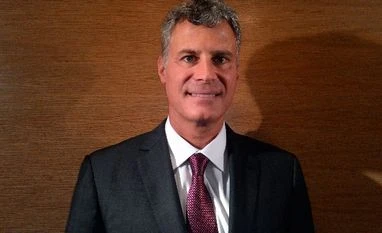 "Modi being treated like a rock star in US: Alan Krueger")


 Connect with us on WhatsApp