
Rising air pollution can affect unborn babies, say health experts
Recommending pregnant women wear N-95 masks if they go outside, Balasubramanian said, Pregnant women are at a higher risk in such an environment
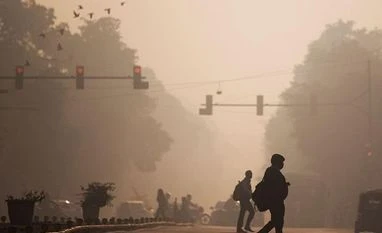 "Rising air pollution can affect unborn babies, say health experts")
WebinarsNew
Deep DiveNew
Explore Business Standard
Recommending pregnant women wear N-95 masks if they go outside, Balasubramanian said, Pregnant women are at a higher risk in such an environment
As the air quality deteriorates in Delhi-NCR, health experts are of the view that air pollution can negatively affect pregnancy, possibly leading to preterm birth, a low birth weight, stillbirth, or congenital abnormalities.
The AQI is constantly dipping into a very poor and severe category in the capital region, with doctors advising expecting mothers to stay indoors as much as possible.
WHO has also cautioned vulnerable groups like pregnant women, older adults above 60 years, and children under 5 years about the risks and health effects that poor air quality can cause.
Recently, a high-resolution satellite image was released, showcasing a massive methane cloud near a waste facility in India.
It is no secret that these gases create a lot of cardiovascular, pulmonary, ENT, and skin-related disasters in the human body. Inhaling harmful substances welcomes innumerable conditions which are at times chronic and dangerous with long-term effects, said Dr. Viswesvaran Balasubramanian, Consultant Interventional Pulmonology and Sleep Medicine at Yashoda hospitals Hyderabad.
Recommending pregnant women wear N-95 masks if they go outside, Balasubramanian said, Pregnant women are at a higher risk in such an environment.
There is research stating that expecting mothers are at risk of experiencing preterm labour and with it, comes the risk of low birth weight, underdeveloped lungs, and many other fatal conditions in the baby, he said.
There are also chances of stillbirth as the air inhaled by the mother very much forms the surviving environment of the baby. Ensure that in such a situation an expecting mother stays away from pollution and is provided with ample nutrition and hydration, he added.
Air pollution is a silent killer and the monstrous toxicity levels in the air of Delhi-NCR are increasing risks for pregnant women. It is affecting everyone with both long-term and short-term side effects. Even unborn babies are not left unaffected.
Air pollution can affect the health of the pregnant woman and the developing baby. Pollutants in the air can cross the placenta, affecting the placenta's health, and disrupting the baby's development. Toxic air can also increase the risk of miscarriage, said Dr Akta Bajaj, Senior Consultant and Head-Obstetrics Gynaecology, Ujala Cygnus Group of Hospitals.
The effect of air pollution on unborn babies depends on several factors, such as how long the exposure lasts, and what the level of air quality is, among others. Pregnancy complications such as pre-eclampsia or high blood pressure, have higher chances to be found in pregnant women who are exposed to air pollution," she said.
(Only the headline and picture of this report may have been reworked by the Business Standard staff; the rest of the content is auto-generated from a syndicated feed.)
First Published: Nov 10 2022 | 5:47 PM IST


 Connect with us on WhatsApp