SC recognises transgenders as third gender
It also ordered the centre and the state governments to include them for reservation in jobs and education
Reuters New Delhi The Supreme Court on Tuesday recognised India’s long-marginalised transgender community as a third gender and, in a landmark judgment lauded by human rights groups, called on the government to ensure their equal treatment.
There are hundreds of thousands of transgenders in India, say activists, but because they are not legally recognised, they are ostracised, discriminated against, abused and often forced into prostitution.
“Recognition of transgenders as a third gender is not a social or medical issue but a human rights issue,” the Supreme Court’s two-judge Bench said in its ruling.
“Transgenders are also citizens of India. The spirit of the Constitution is to provide equal opportunity to every citizen to grow and attain their potential, irrespective of caste, religion or gender.”
A person who is transgender does not identify with the gender stated on their birth certificate. The court ruling recognised the community as a marginalised group and directed authorities to implement policies to improve their socio-economic status.
The petitioners’ lawyers said this would mean that all identity documents, including a birth certificate, passport and driving licence would recognise the third gender, along with male and female.
The government will also have to allocate a certain percentage of public sector jobs, seats in schools and colleges to third gender applicants, said lawyer Sanjeev Bhatnagar.
Due to their lack of access to jobs and education, many male-to-female transgenders — also known as hijras — are forced to work as sex workers or move around in organised groups begging or demanding money.
Hate crimes in the conservative country are common, say activists, yet few are reported partly due to a lack of sensitivity by authorities such as the police.
Transgender rights activist Laxmi Narayan Tripathi said the verdict was a great step towards ending such discrimination. “Today judges Radhakrishnan and A K Sikri said any nation can progress only after it grants all the rights and human rights to its citizens. The transgenders have been given the biggest right,” said Tripathi. “Today I feel a proud citizen of India.”
The Supreme Court was slammed by human rights activists in December when it reinstated a ban on gay sex, following a four-year period of decriminalisation that helped bring homosexuality into the open. The court said only Parliament could change the law. Human rights groups said they hoped the ruling on transgenders would encourage the new parliament to repeal the anti-homosexuality law as one of its first actions.

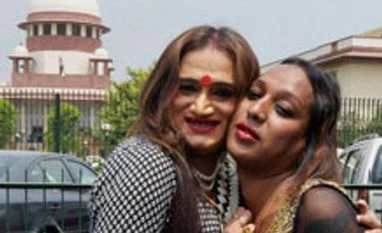 "SC recognises transgenders as third gender")


 Connect with us on WhatsApp