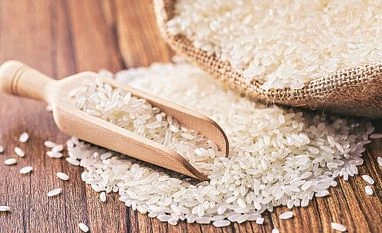
India today signed a protocol with China for rice export of both Basmati and non-Basmati rice varieties in the presence of Prime Minister Narendra Modi.
Under the protocol, Indian rice exported to China would have to comply with Chinese quarantine laws and regulations. The Indian department of agriculture will ensure that the rice exported is free of six identified pests which are of concern to China. Each batch of rice which is being exported has to be accompanied by a certificate issued by the agriculture ministry saying that it complies with China's phytosanitary requirements.
The certificate would also give the place of origin of rice in India. The department of agriculture, cooperation and farmer welfare under the ministry of agriculture would ensure the required phytosanitary conditions during storage and processing. Such conditions are to be ensured during the rice plantation.
The protocol will remain in force for three years, with automatic extension of three years unless one of the sides decides to terminate or amend it two months before the expiry.
In March, China had agreed to give a commitment to accelerate market access for Indian non-basmati rice, rapeseed meals, soya meals, pomegranate and pomegranate arils, okra, banana and, other fruits and vegetables, and bovine meat.
China had also agreed to resolution of issues of Indian pharma products exports from India. Over 240 pharmaceutical applications from Indian exporters were pending with China.
India, in turn, had agreed to accelerate the provision of market access to Chinese pears, tagetes (marigold) seeds and apple. It in May 2017 put restraints on import of these products after sanitary and phytosanitary (SPS) concerns. Prior to this, India had been importing about $70 million worth apples and $30 million pears.
The two countries are the largest emerging economies of the world with 35 per cent of the world’s population and around 20 per cent of the world’s GDP but the relative volume of bilateral trade is less than 1 per cent of global trade.
Read this article for free
Register to continue reading premium journalism and analysis from Business Standard.

 "SCO summit 2018: Indian rice finds road to China; two nations sign protocol")












 Connect with us on WhatsApp