For Nirmal Chawla, 85, memories of Partition refuse to fade. She was 12 when the local mukhiya (head) assured everyone that they could continue staying in their hometown Arifwala Mandi, now in Pakistan Punjab, “even if Partition did happen”. But hours later, a little before seven in the morning, he sent a messenger: “In the next two to four minutes, in whatever condition you might be, please leave.”
Chawla remembers how the Sikh and Jat families got women and children onto carts that were stocked with wheat and salt. By 9 am people had emptied out of the town and started their long journey from one newly formed country to another. When they camped, some got one roti, others half. They navigated paths lined with corpses and somehow found the strength to continue moving. On the tenth day, they reached Fazilka, also called Bangla, a border town that was a marker for India. Chawla’s story is documented in a short film, Fazal ka Bangla, by her grandson Ansh Ranvir Vohra, a filmmaker who grew up in Delhi and recently moved to Toronto.
The Inside Out by Sana Nasir. Photo Courtesy: The Pind Collective
Visual artists, poets, dancers and filmmakers have contributed to themes ranging from the meaning of home to ideas of resistance, and gendered spaces. Much of these works are conversations carried on through the works.
Karachi-based Samya Arif’s “The Future is Female”, a vividly coloured fantastical illustration of women overcoming oppression on both sides of the border, for instance, is a response to Vadodara’s Sumit Roy’s “Swades”, a gritty look at the reality of many mothers caught in bad situations.
Delhi’s Urvashi Bahuguna’s poem, “The Night Hag as a Hero in the Marvel Cinematic Universe”, is a response to Aziza Ahmad’s “Night Hag’s Night Off”, a diptych that demands the statistics for tired women, those who have failed to make historical, professional or personal progress due to lack of sleep in domestic settings.
Though their audience is spread across the subcontinent, the artists would like to reach younger people and help them see beyond the verbal vacuities of governments and one-sided narratives.
Nasir’s Pantone series. Photo Courtesy: The Pind Collective
The collaborative doesn’t presently pay the artists, but doing so is on its “very long wish list”.
Listening to artists from both sides of the border has been rewarding. “It is significant not just because of what the artists are saying but also because of the realisation that we kind of stop listening when we go a certain number of degrees west of where we are (India),” says Tandon Vieira. “This is a slightly unnerving thing for a young person. We like to believe that we live in a global, connected world but very often we have narrow ideas of what we want to know and listen to.” It is also important, adds Nasir, to have such conversations given the hate-mongering the media engages in.
In Across, another short documentary, Vohra captures the stories of the northernmost villages of Ladakh, of a people whose families were split forever in the aftermath of the 1971 war with Pakistan. “Everyone from Turtuk (a border village) has someone or the other in Pakistan now,” says “King” Yabgo Kacho, who is a descendant of the Yabgo dynasty and carries a wooden cane topped with a metal serpent’s head in the film.
When the war broke out in December, traders and businessmen who had gone to the Pakistan side got stuck there: fathers and sons, husbands and wives, siblings all found themselves on opposite sides of the border. Two of Kacho’s sisters still live in Pakistan.
From his border hamlet Thang, Mohammed Goba Ali can clearly see the village in Pakistan where part of his family lives. Under orders from Chewang Rinchen, the colonel who led the battalion in Ladakh in 1971, Ali’s father was sent across the border with a letter stating that those who wished to return to India could do so. For reasons Ali can only speculate about, his father was not allowed to return. He recalls a Pakistani soldier telling him that his father borrowed a pair of binoculars so that he could see his son playing in India.
Ali was reunited with his family when he travelled to Pakistan in 2013. Videos of the event document their tearful reunion after a long separation.

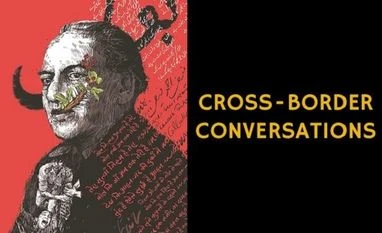 "The Pind Collective, a virtual home for Indian and Pakistani artists")












 Connect with us on WhatsApp