To fight deadly smog, farmers are being encouraged to sell crop waste

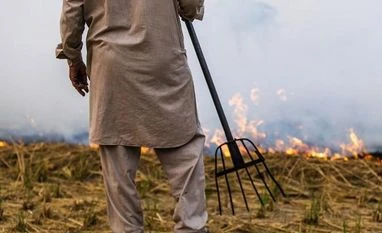
Smoke from the burning of crop stubble lingers over most of north India for weeks during the cold months of November and December, with air quality deteriorating to hazardous levels in several areas

stubble burning
Photo: Bloomberg
Rajesh Kumar Singh | Bloomberg
3 min read Last Updated : Dec 14 2022 | 7:03 AM IST
Farmers in India are being encouraged to sell their crop waste rather than burn it to help accelerate progress on curbing fires that spread a deadly, choking smog across key cities.
 
Smoke from the burning of crop stubble lingers over most of north India for weeks during the cold months of November and December, with air quality deteriorating to hazardous levels in several areas, including the capital New Delhi.

BiofuelCircle, a startup based in the western Indian city of Pune, is attempting to connect farmers to companies that can turn the waste into briquettes that can be burned in power stations, or ethanol for blending with liquid fuels.

“The environmental issues due to crop residue burning are mainly because of the inefficiency of the supply chain,” BiofuelCircle founder Suhas Baxi said. “The business case for building a stable and reliable supply chain is very solid.”

India wants to convert its 230 million tons of annual farm waste and massive piles of kitchen refuse into energy to help reduce fuel imports and improve air quality. If there was sufficient demand and infrastructure, using the country’s entire supply of crop waste for bio-energy could generate as much as $50 billion of annual revenue, Baxi said in an interview.

Smoke from the burning of rice crop stubble in Punjab in 2019. (Photo: Bloomberg)
But progress has been slow. The lack of a reliable supply chain — from timely procurement, to storage, processing plants and finally a market for the products — has meant that farmers for now continue to burn most of their crop residue. Barely 20-30% of farm waste is harnessed, mostly for lower-value products such as briquettes for blending with coal for use in industrial boilers, Baxi said. 

“We don’t have the ability to absorb what the farmer is able to give,” he said. “There’s need for mechanization, there’s need for huge storage capacities. There’s investment required in supply chain and that investment will not only solve the problems at hand, but create a bigger opportunity.”

A market for more products including biodiesel, sustainable aviation fuel and compressed biogas is still in its infancy, though there has been some progress. The ethanol percentage of retail gasoline has increased to about 10% from just 1.4% in 2014, when Prime Minister Narendra Modi started his first term in office.      

Modi’s government has also been supportive of tackling stubble burning, offering subsidies to buy machinery to gather crop residue to setting mandates for coal plants to use at least 5% biomass.

One subscription. Two world-class reads.

Already subscribed? Log in

Subscribe to read the full story →
*Subscribe to Business Standard digital and get complimentary access to The New York Times

Smart Quarterly

₹900

3 Months

₹300/Month

SAVE 25%

Smart Essential

₹2,700

1 Year

₹225/Month

SAVE 46%
*Complimentary New York Times access for the 2nd year will be given after 12 months

Super Saver

₹3,900

2 Years

₹162/Month

Subscribe

Renews automatically, cancel anytime

Here’s what’s included in our digital subscription plans

Exclusive premium stories online

  • Over 30 premium stories daily, handpicked by our editors

Complimentary Access to The New York Times

  • News, Games, Cooking, Audio, Wirecutter & The Athletic

Business Standard Epaper

  • Digital replica of our daily newspaper — with options to read, save, and share

Curated Newsletters

  • Insights on markets, finance, politics, tech, and more delivered to your inbox

Market Analysis & Investment Insights

  • In-depth market analysis & insights with access to The Smart Investor

Archives

  • Repository of articles and publications dating back to 1997

Ad-free Reading

  • Uninterrupted reading experience with no advertisements

Seamless Access Across All Devices

  • Access Business Standard across devices — mobile, tablet, or PC, via web or app

Topics :Stubble burningstubble firesair pollutionDelhi PollutionEnvironment

Next Story