15th Finance Commission likely to cut devolution to states marginally

15th FC may also sequester Centre's defence, internal security capex from divisible pool
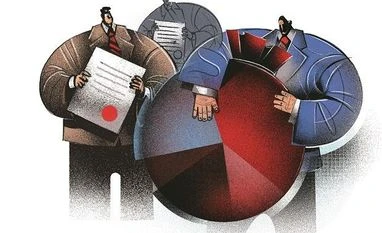
fund distribution
Illustration: Ajay Mohanty
Arup Roychoudhury New Delhi
4 min read Last Updated : Aug 12 2019 | 2:00 AM IST
In what may come as a fiscal relief for the Centre, the Fifteenth Finance Commission (15th FC) may recommend a marginal cut in the states’ share of tax devolution, from the current 42 per cent, Business Standard has learnt.

In addition, the capital expenditure (capex) components of the Centre’s allocation for defence and internal security could be sequestered from its overall tax revenues. 

The new devolution formula could thus be applied to the Centre’s tax revenues after deducting from them its capex on defence and internal security. 

Both the contemplated moves would result in lower transfers to the states, which are expected to oppose these proposals if the commission finally accepts them. But the Centre’s finances, currently under stress, would receive a boost. 

The previous (Fourteenth) Finance Commission had raised the share of states from the divisible tax pool to 42 per cent, from 32 per cent before that. The five year-period of the 14th FC ends on March 31, 2020, after which states will get their share of the divisible pool based on the 15th FC’s recommendations till 2025, as mandated by the Constitution.

“The commission will not increase the states’ devolution from the existing 42 per cent. It may reduce it,” said a person aware of the deliberations within the 15th FC.

Endorsing such thinking, another person involved in the commission’s deliberations said it had received recommendations from economists and public finance experts to the effect that the overall share of revenues for the states could be either maintained at 42 per cent or be lower than that.

The 15th FC is expected to submit its report to the government on November 30. It was given a month’s extension to examine if a separate mechanism for funding defence and internal security ought to be set up. The sequestration of capex on defence and internal security before applying the devolution formula on the Centre’s revenues is a response to the new task the commission was entrusted with.

While the committee’s report is not yet finalised, there is a strong view that given the situation of the Centre’s finances since the advent of the goods and services tax, anything more than a 42 per cent devolution will be a burden.

A rationale for maintaining the status quo or reducing the states’ share is that if one includes all the allocations that go to the states in addition to devolution, the money they receive can be considered above 50 per cent of the divisible pool.

“To some extent it is already more than 50 per cent for the states if you include the revenue deficit grants, all payments on account of national and state disaster funds, all state specific grants if we choose to give, and all the devolution which goes to urban local bodies and panchayats,” 15th FC Chairman N K Singh had told Business Standard in an interview last month.

“And then finally the Rs 3.5 trillion, which goes as Centre’s contribution to centrally-sponsored schemes. The argument to increase the devolution above 42 per cent doesn’t take into account these things,” he had said.

In its meetings with the 15th FC, the finance ministry has given its point of view. Government officials put it thus: If one takes just the GST, the states get state GST, 50 per cent of the integrated GST, compensation for those below 14 per cent GST growth, as well as 42 per cent of the central GST.

The 15th FC has visited most of the states and Union territories (UTs) barring Uttar Pradesh, Goa, Rajasthan, Sikkim, and Jammu & Kashmir.Jammu & Kashmir will now be divided into two UTs of Jammu and Kashmir, and Ladakh.

As reported earlier, the proposed UT of Jammu and Kashmir will get funds from the divisible tax pool of the Centre, after recommendations of the 15th FC. Funds from this source are usually given to states and not UTs. Ladakh will get funds from the Centre’s share of the divisible pool. These provisions have been made in the Jammu and Kashmir Reorganisation Bill, 2019, passed earlier this month.

State of finances
  • 15th FC may marginally reduce devolution to states from current 42%
  • 15th FC may also sequester Centre’s defence, internal security capex from divisible pool
  • Both moves, if carried out, will reduce amount due to states
  • 15th FC was given new terms of reference on defence and internal security allocation
  • Report expected on November 30

One subscription. Two world-class reads.

Already subscribed? Log in

Subscribe to read the full story →
*Subscribe to Business Standard digital and get complimentary access to The New York Times

Smart Quarterly

₹900

3 Months

₹300/Month

SAVE 25%

Smart Essential

₹2,700

1 Year

₹225/Month

SAVE 46%
*Complimentary New York Times access for the 2nd year will be given after 12 months

Super Saver

₹3,900

2 Years

₹162/Month

Subscribe

Renews automatically, cancel anytime

Here’s what’s included in our digital subscription plans

Exclusive premium stories online

  • Over 30 premium stories daily, handpicked by our editors

Complimentary Access to The New York Times

  • News, Games, Cooking, Audio, Wirecutter & The Athletic

Business Standard Epaper

  • Digital replica of our daily newspaper — with options to read, save, and share

Curated Newsletters

  • Insights on markets, finance, politics, tech, and more delivered to your inbox

Market Analysis & Investment Insights

  • In-depth market analysis & insights with access to The Smart Investor

Archives

  • Repository of articles and publications dating back to 1997

Ad-free Reading

  • Uninterrupted reading experience with no advertisements

Seamless Access Across All Devices

  • Access Business Standard across devices — mobile, tablet, or PC, via web or app

Topics :15th Finance Commissiontax revenueFinance Commission

Next Story



