The immediate aftermath of a disaster almost always brings out angry responses. The tragic incident in Uttarakhand is no exception. Many experts, who belong to the "I told you so" camp, have come out with their own causal analysis of the tragedy. While town planners are blaming the rapid expansion of construction activities, naturalists are of the view that the disaster is nature's way of restoring balance against greed and destruction. Environmentalists are blaming, among others, hydro projects for the disaster that claimed many lives.
The environmentalists say hydro projects involve construction of dams which lead to diversion of the natural course of river, blasting to make tunnels and construction of roads and townships that result in deforestation. "These factors increase the vulnerability of the mountainous regions to landslides," says Himanshu Thakkar, country head, South Asia Network on Dams, Rivers and People . He adds these factors also aid the process of climate change, which is the reason behind increasing incidence of cloudburst and flash floods.
Uttarakhand has a total installed hydro-electric power capacity of 3,426 Mw. Another 95 projects with a total capacity of 12,235 Mw are in various stages of development. According to the data available with Uttarakhand Jal Vidyut Nigam Limited (UJVNL), the state government is developing 32 projects with a total capacity of 2,815 Mw, PSUs like NTPC and NHPC are developing 25 projects with a total capacity of 7,302 Mw and the private sector is working on 38 projects of 2,118 Mw capacity.
Most of these projects are stuck because of opposition from environmental groups and religious bodies. Following pressure from these groups, the Centre issued a notification last year declaring the 135-km stretch between Gaumukh and Uttarkashi, along the Bhagirathi river, an eco-sensitive zone banning all construction activity in the region.
This order will seal the fate of hydropower projects of 1,743 Mw. Incidentally, Uttarakhand has the potential to produce 25-30,000 Mw of power. However, there are some groups in Uttarakhand who want power projects to go ahead. They are saying that environment protection is important, rivers should be allowed to flow and the natural beauty of the region should be preserved. But the benefits of development must be allowed to percolate down. "Forty per cent of the villages do not have even kuchcha roads and 1,200 villages do not have electric poles," says Avadhash Kaushal, chairman, Rural Litigation and Entitlement Kendra . His organisation has been fighting court cases, sending petition to the Prime Minister and other ministers for resumption of three projects that were cancelled following a fast by environmentalist-turned religious guru GD Agrawal.
He says "environmentalism has become a new religion as faith is getting precedence over reason." To support his argument, he says "building tunnels do not require blasting. Power projects do not consume even a drop of water. All they do is regulate the flow of the river in a certain way." "Because of dams, the town of Rishikesh was saved from nature's fury this time ," .
While environmentalists are concerned about long term damages, pro-development lobbies want the benefits of the India growth story to reach even remote corners of Uttarakhand. Gandhian and environmentalist Anupam Mishra offers a solution. "There is nothing wrong with building roads or power plants. We just need to be sensitive to the basic character of the place before adding or subtracting something. If a place can manage with just two power plants, why sign MoUs for 20?" he says. The region had massive floods in 1893, 1894, 1970 and 1977, he adds.
The question is, should Uttarakhand go ahead with hydro-power plants? Hydro-power expert and former engineer with Central Water Commission Awadhesh Jha lists the benefits of hydro-power projects: "The country like ours should have a blend of 40 per cent power from hydro projects and 60 per cent from other sources. The share of hydro projects in the country has been constantly falling from 40 per cent to 18 per cent between the Second Five-year plan to the Eleventh Five-year plan. Hydro-power is non-polluting and it helps in regulating peak hour demand as it can be switched on and off instantly, depending on the grid requirement." He adds that while initial investment in producing hydro power is higher at Rs 7 crore per megawatt than thermal power's average cost at Rs 5-5.5 crore, yet hydro-power becomes a cheaper source over a period of ten years.
What is the way out then? Environmentalists offer a solution. Thakkar says his organisation's study revealed "89 per cent of all hydro-power plants are operating below their optimum level and 50 per cent are operating at less than 50 per cent of their optimum level. Instead of adding more plants, we should increase the efficiency of the existing ones." He adds: "If at all capacity addition is required, we should do proper environmental assessment, disaster potential assessment, climate change assessment a proper environmental monitoring mechanism in place. Else we are inviting disaster."
For the time being, though, let us refrain from hasty conclusion.
Status check: Uttarakhand Several hydro-electric projects in the state are stuck due to opposition from environmental and religios groups
* 3,426 Mw Total installed capacity
* 12,235 Mw Capacity in the pipeline
* 2,815 Mw Projects being developed by state government
* 7,302 Mw Proposed addition by Central PSUs
* 2,118 Mw Proposed addition by the private sector
Source:CEA and UJVNL

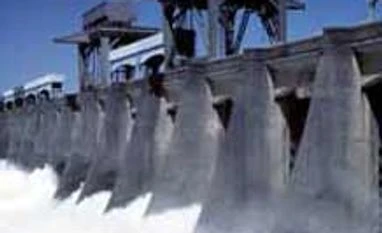 "Can we afford to damn dams?")


 Connect with us on WhatsApp