Central bank says is independent, but respectful of government
Says he has agreed with the suggestions of government several times
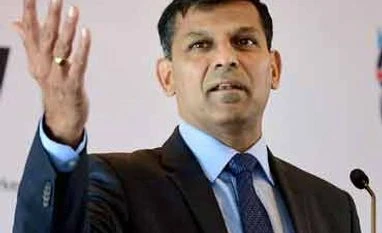
BS Reporter New Delhi The Reserve Bank of India (RBI) and the government share a respectful relationship on fixing the policy rate, even though the former takes an independent decision, central bank head Raghuram Rajan said in New Delhi on Friday.
Rajan said he had agreed with the suggestions of the government several times.
"That is why we had 125 basis points of rate cuts so far (in 2015)," he said.
Earlier, the government had been pressing for a reduction in interest rates to boost economic growth, even as the RBI had taken a cautiious stance, with inflation-control as its goalpost. Surprising the markets, the RBI cut repo rate by 50 basis points in September to 6.75 per cent.
Repo rate is the rate at which the central bank lends money to commercial banks in the event of any shortfall of funds.
This is the second statement from Rajan that reflects a closer relationship between Mint Road and North Block. On Thursday, Rajan had said the RBI and the governmnet had agreed on the composition of the monetary policy committee, the structure of which had raised a controversy.
Rajan on Friday said reduction in inflation would help stabilise the rupee.
On rising bad loans in the banking sector, Rajan said, "There are challenges... We have got to roll up our sleeves and work at them. But I don't think it's a cause of distress."
A former International Monetary Fund (IMF) chief economist, Rajan said there was a need for better safety nets in the form of currency-swap pacts between countries to deal with temporary liquidity needs. "While countries can go to the IMF, there are political problems and stigma attached to it," he said.
He also said, that it was time that emerging markets like India came up with ideas regarding the global economy rather than just reacting to the agenda set by the developed economies.
" While asking for a quota in IMF is fine, what emerging markets are lacking is coming up with ideas. Generally the emerging markets only react to the agenda made by the developed markets. It is time, we set the agenda for global economy and come up with ideas," he said.
On the impact of monetary decisions of the large economies on the emerging markets, Rajan said there need to be 'rules of the game' and the need for an impartial umpire to limit spillovers to other countries.
"We have to be cognizant of limits of monetary policy…We need to have rules of the game. Today a country only looks at whether it makes sense for them …monetary policy of large countries affects everybody," he said.

 "Central bank says is independent, but respectful of government")


