The call is getting louder in the insurance sector for setting up a natural catastrophe pool to fund losses.
Such a structure had been suggested, to cover mega risks. The need for this is being felt by insurance companies, so that the risks can be shared. The proposed pool will cover the losses from catastrophic events and the claims paid out of a common pool, in which all general insurers are stakeholders.
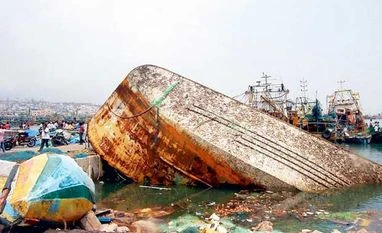
The Hudhud cyclone that hit Andhra Pradesh and Odisha has led to Rs 3,000-3,200 crore of claims for property and crop damage. Floods in Jammu & Kashmir saw insurers taking a hit of Rs 3,000 crore.
The proposal to have a pool to cover such risks was presented to the National Disaster Management Authority.
"Whether public general insurers will have a majority stake or all insurers have equal stake is yet to be decided. Who will pay the premiums is also not clear," said a senior insurance official.
Another pool structure in the works for months is liability cover for the risks related to nuclear energy. The government is trying to address the concerns raised by domestic suppliers of equipment, over certain provisions of the Civil Liability for Nuclear Damage (CLND) Act, 2010.
The idea of forming a pool was mooted earlier this year but has run into differences among stakeholders on certain clauses.
Having a nuclear pool would also mean inspection by foreign re-insurers. This, according to another insurance executive, is an area of contention for the government. This pool was to have an initial corpus of Rs 1,050 crore.
Once set up, there would be collaboration between a national and international pool for sharing of risks. Both entities would share each other's liabilities.
At present, nuclear reactors in India have covers for zones that are outside the area of radiation and nuclear reactors. This is due to the lack of underwriting data on the liability for hot zones. Once a nuclear pool is in place, the premiums will go into the pool, and a cover for hot zones and their liabilities will be provided.
The CLND Act creates a liability cap for plant operators, for economic damage in the event of an accident. It also leaves nuclear suppliers free of most liability. Industry experts had said both operators and suppliers should be jointly held liable for civil damages in case of an accident.
The Act also provides for state-run Nuclear Power Corporation of India, which operates all the plants in India, to seek compensation from suppliers in case of an accident due to faulty equipment.
In the area of crude oil imports, while the sanctions on Iran have eased, insurers said the proposed Indian Energy Insurance Pool is far from being set up.
Public general insurance executives say the need to have a pool has also reduced. Since importers are now taking covers from the exporting nation, there is no consensus on size of the cover.
Oil companies were asking for one of Rs 9,500-11,000 crore but the pool would be able to offer only Rs 2,000 crore. State-owned general insurers had invited their private sector counterparts to be part of this pool but none of the latter accepted, citing the high associated risks.
At present, the only pool structures that exist are the Third Party Motor Insurance Pool (now called Declined Risk Pool) and the India Market Terrorism Pool (IMTP). Under the former pool, insurers have the right to refuse or decline to give third-party insurance if too risky an asset to underwrite. The IMTP was set up in 2002, after the attack on New York's World Trade Centre. The pool covers companies/institutions for a liability of Rs 750 crore, including material or property loss or damage from terrorist activities.

 "Clamour for catastrophe pool to fund losses")


 Connect with us on WhatsApp