Finance Ministry spanner in RBI's COO talks
Government asked Reserve Bank to discuss issue only at board meet attended by its nominees
Manojit Saha Mumbai It is not still clear whether the finance ministry and the Reserve Bank of India (RBI) are thinking alike on the central bank's move for a chief operating officer (COO) with the rank of a deputy governor.
This was on the agenda of its board meeting on July 10 but was halted following the finance ministry's intervention.
At present, the law permits RBI to have four deputy governors, appointed by the government. To increase the number, the RBI Act needs to be amended. Till this is done, it was suggested the central bank appoint a COO with a deputy governor rank. RBI also proposed to appoint two additional executive directors (EDs).
| BONE OF CONTENTION |
- RBI wants to increase the number of deputy governors, EDs
- At present, deputy governors’ appointments are cleared by the appointment committee of Cabinet, headed by the PM
- Till the time law is amended, a COO with a deputy governor rank is proposed
- Committee of central board asked to refer the matter to board
- Govt wants such appointments to be discussed when its nominees’ are present at the board meeting
- Issue could be taken up in the next board meet in August
- The meet is scheduled in Mumbai but could be shifted to Delhi
|
The Union Budget was presented on July 10, the same day the RBI board was to meet in Chennai. This was a constraint for the government-nominated board members in attending. Shortly before the meeting, the finance secretary's office sent a letter to RBI stating such issues should be discussed only when the government nominees were present, according to a person with direct knowledge of the matter. The letter suggested RBI defer the issue till the next board meeting, where the government nominees will be present.
At present, Arvind Mayaram, secretary, department of economic affairs and finance secretary, and G S Sandhu, secretary, department of financial services, are the government's nominees on the board. The next meeting is in August and typically held in Mumbai, when the central bank finalises its annual accounts and declares the surplus it will be transferring to the government.
There is talk that the meeting could be shifted to Delhi, as, typically, the post-Budget RBI board meeting is held in the capital, when the finance minister addresses the members.
The central bank has an elaborate restructuring programme of its human resources and functions. The move to appoint a fifth deputy governor and two more EDs was a part of the process. At present, RBI has nine EDs.
The issue of a COO with deputy governor's rank was first taken up in the committee of the central board (CCB), a few days before the Chennai board meeting. The CCB felt the matter is important and should be discussed before the full board.
According to the present rules, a candidate is eligible for a deputy governor if below 60 years. A deputy governor is generally appointed for a maximum of five years or till the age of 62, whichever is earlier. However, there are instances when the rules were relaxed.
It is not clear what would be the eligibility criteria for the COO-deputy governor appointment or the retirement age or service rules - RBI's service rules are applicable till the ED rank. Out of the present four deputy governors, two are promoted from within the RBI ranks and the other two from outside, one an economist and the other a commercial banker. There is ambiguity on whether the COO would be an internal or external candidate.
There has been an uneasy relationship between the finance ministry and the central bank in the past, too. Both the previous finance ministers, first Pranab Mukherjee and then P Chidambaram of the earlier United Progressive Alliance government, had run-ins with the previous RBI governor, D Subbarao, on several issues, including monetary policy matters.
Mindful of this, both Chidambaram and the present finance minister, Arun Jaitley, have made an effort for better coordination after Raghuram Rajan took charge at the central bank last September, refraining from publicly commenting on RBI-related issues.

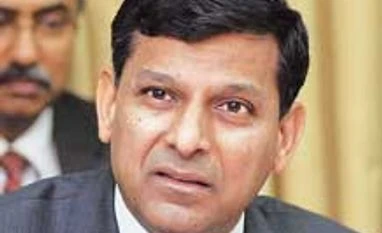 "Finance Ministry spanner in RBI's COO talks")


 Connect with us on WhatsApp