The government and the Reserve Bank of India (RBI) on Monday imposed strict curbs 11 days before the deadline to deposit scrapped Rs 500 and Rs 1,000 notes in bank accounts.
In separate notifications, the finance ministry and RBI said over Rs 5,000 worth of scrapped notes could be deposited in bank accounts only once, after the depositor had been questioned in the presence of at least two bank executives on why he or she could not deposit the amount earlier. The finance ministry’s notification came on Saturday but was released on Monday. RBI’s statement was also released on Monday.
“The explanation should be kept on record to facilitate an audit trail at a later stage. An appropriate flag also should be raised in the core banking solution to that effect so that no more tenders are allowed,” RBI stated. It also said these restrictive conditions would apply on cumulative deposit of notes in a single account if it exceeded Rs 5,000.
However, defunct currency up to any amount can be deposited under the new tax amnesty scheme, the Pradhan Mantri Garib Kalyan Yojana, subject to 50 per cent tax and a four-year interest-free lock-in for 25 per cent of the amount.
Old notes up to the Rs 5,000 limit received across the counter would be allowed to be credited into bank accounts in the normal course until December 30, the RBI clarified.
Analysts said the move would add to the woes of those still waiting to deposit old notes. However, officials said people with money that was accounted for had no cause to worry.
“People are finding new ways to beat the rules. This seems like a last-ditch effort by the authorities,” said Madan Sabnavis, chief economist, CARE Ratings.
He added bank branches might not have the manpower to spare two executives per depositor and that the Rs 5,000 limit was too low. “Many people with accounted-for wealth would have waited for the queues to recede. Such people may have more than Rs 5,000,” he said. A finance ministry official said most people had deposited old notes and the decision would not inconvenience those with legitimate wealth.
“This move is aimed at money mules. People who have not deposited yet but have wealth accounted for need not worry,” the official added.
The notification by the finance ministry also said bank notes collected during November 10-14 by district co-operative central banks would be subject to RBI instructions. Also notes deposited by customers or by primary agricultural credit societies will be audited by the National Bank for Agriculture and Rural Development.
Public sector bank executives said even though the new rules would be operational for two weeks, it would to be difficult to carry out a detailed scrutiny. Besides paper work, it will be tough to deal with angry customers, officials added. C H Venkatachalam, General Secretary, All India Bank Employees Association, said, “Banks employees are under tremendous work pressure. This is going to add to the burden. Where is the bank staff (officers) for additional scrutiny?”.
Adding, “Bank executives are not geared up for detailed investigation. Let the government place income tax officials at bank branches to verify the claims by those depositing money (using demonitised notes for putting amounts in excess of Rs 5,000) in bank accounts.
Demonetisation Saga
Nov 8: Demonetisation announced. Rs 500 and Rs 1,000 notes become null with immediate effect. Deposits of old notes for over-the-counter exchange capped at Rs 4,000. Deposits in accounts with incomplete KYC norms capped at Rs 50,000
Nov 14: Exchange limit increased to Rs 4,500 from Rs 4,000
Nov 15: Indelible ink to be used on people exchanging notes to weed out proxies
Nov 18: Exchange limit reduced to Rs 2,000
Nov 24: Exchange of old notes banned, foreigners exempted
Dec 19: Deposit of old notes exceeding Rs 5,000 limited to only once per account till Dec 30, that too after scrutiny

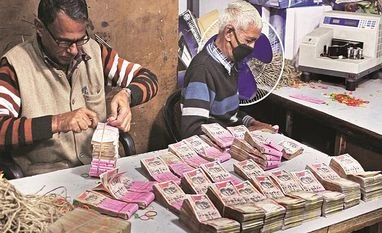 "Fresh curbs on deposits above Rs 5,000: All you should know")


 Connect with us on WhatsApp