The Government of India (GoI) will try to get a strong commitment on services trade liberalisation from member countries at the next round of negotiations on a Regional Comprehensive Economic Partnership (RCEP), which will see trade ministers meet on Sunday.
RCEP is a proposed pact between the 10 Asean economies and six others with which the grouping currently has free-trade agreements (FTAs) — Australia, China, India, Japan, South Korea, and New Zealand. So far, 22 rounds of talks have concluded, apart from five minister-level meets.
However, senior sources said commerce and industry minister Suresh Prabhu might not visit Tokyo for the ministerial dialogue that is expected to hammer out basic tenets of a deal.
Negotiators from India will be looking to secure a commitment on market access in services trade from other nations, given that discussion on goods trade had deteriorated over the past two rounds, a senior commerce department official said before leaving for working committee talks, set to happen till Friday.
India has large numbers of trained services professionals such as nurses, chartered accountants and information technology staffers. It has pushed for easing of norms on cross-border migration of professionals.
After missing the deadline last year, members of the Asean bloc are pushing hard to create a basic framework by the end of the year. However, many issues are yet to be finalised, including the number of products over which duties will be eliminated. Negotiations formally began at the end of 2012 and will be continued in Tokyo through 16 categories. These cover conventional items such as tariff reductions and market access and newer items such as intellectual property rights and e-commerce.
“India should be wary of e-commerce norms being imposed on it, owing to the digital platform being in a nascent stage. Within e-commerce, issues such as consumer protection, domestic regulatory frameworks, customs duties and data protection,” said Biswajit Dhar, trade expert.
The bulk of contention remains tariff. Over the past year, GoI has stuck to its position of on offering differential rates for tariff reduction. “We are willing to offer reduction on up to 86 per cent of all tariff lines, with a six per cent deviation for nations with which we don't have an FTA,” the official mentioned earlier said.
Under this scenario, India might offer to reduce its tariffs by 74-86 per cent of all goods. However, other nations, led by New Zealand and Australia, want tariffs cut on up to 92 per cent of all goods. Supported by the Asean bloc, they have also stressed that the deviation proposed by India for various nations should be only one or two per cent.
Also, GoI had suggested a separate rate of reduction for China, which has not been taken lightly by Beijing, which has continued to demand higher reductions. Last month, Chinese officials came here for bilateral discussion on the issue. While Beijing asked that India reduce tariffs on 90 per cent of all goods trade if it wanted non-reciprocal market access, GoI refused to provide concessions on more than 75 per cent of items.
India has been pressed to open its mega consumer market to foreign products and cut non-tariff barriers. While GoI has held out on market access for agricultural items like wheat and dairy, farmer groups have already protested against any of the proposals.
There has been significant pushback against the proposed deal from domestic manufacturing and exporting sectors. They argue existing FTAs with Malaysia, Japan and South Korea are grossly unfavorable to India. "With all these nations also being part of the RCEP, which aims for further easing of import barriers and market access restrictions, there have been concerns from a couple of industry bodies, which have asked the government to exempt specific commodities from the list of items currently being discussed." a senior official said. This includes Confederation of Indian Industry and Aluminium Association of India, among others.
Overall, India's trade deficit rose in 2017-18 for seven countries in the RCEP grouping, according to a recent report.
For India, RCEP presents a platform to further its strategic and economic status in the Asia-Pacific region. Expected to be the largest regional trading bloc in the world, accounting for nearly 45 per cent of the global population and combined gross domestic product of $21.3 trillion, it might bring the biggest economies of the region into a trading arrangement for the first time.

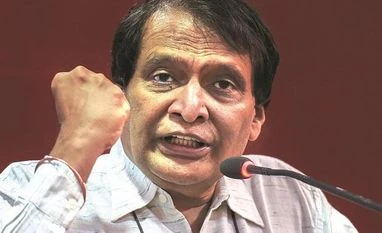 "India to focus on services trade at RCEP ministers meet in Tokyo")












