It's up to RBI to decide on policy rate cut: Rajan
Hints room for more accomodative policy
BS Reporter New Delhi The Finance Ministry today indicated the Reserve Bank of India (RBI) had the room to cut policy rates in its next policy review on March 19.
“It is for RBI to take a call on the rate cut and it has all the information needed to take a decision,” Chief Economic Advisor Raghuram Rajan said in an interaction with newspapers today. He added that in its growth projections for next year, the government had factored in a rate cut by RBI.
“They manage the monetary side. But that does not mean that their aim is controlling inflation only, as the governor himself articulated that they are also worried about growth. Our job is to manage the fiscal side and also focus on growth,” said Rajan.
Rajan’s colleague in the ministry, Economic Affairs Secretary Arvind Mayaram, also today expressed hope that the central bank would vote for growth.
“We believe RBI will do a comprehensive and nuanced analysis of the economy and take the right decision and we hope it will vote for growth. I am happy with what he (RBI Governor D Subbarao) has said,” Mayaram said.
Rajan, when asked whether the economy was heading for stagflation, as stated by the Prime Minister’s chief economic advisor C Rangarajan, said the economy was not stuck in a high inflationary environment, nor could growth of five per cent be called stagnation.
Rajan also said there were signs in export numbers, industrial output and the Purchasing Managers’ Index (PMI) that the economy had started picking up. However, it was too early to celebrate and the government should not rest until the economy came back to growth of eight plus per cent.
On the wide band of 6.1 per cent to 6.7 per cent for growth projection of next year, he said, “We are in a period of high uncertainty. We have turned around but I can’t be sure.”
Asked about a ban on gold imports as a solution to tackle a high current account deficit, Rajan said banning would be a harsh move. Instead, there was a need to introduce instruments to give clear returns. “If you can bring down inflation, it will have the greatest impact on gold demand. High gold prices are suggesting a lack of interest in other instruments. I’m more reluctant to advocate a ban.”
Rajan said there were problems in substituting gold with gold bonds. Issuers have to hedge because if they have issued gold bonds without buying gold, they can be liable for huge losses when the bonds come up for redemption.
On deregulation of fuel prices, he said it was in the national interest to let domestic retail prices be linked to international market prices.

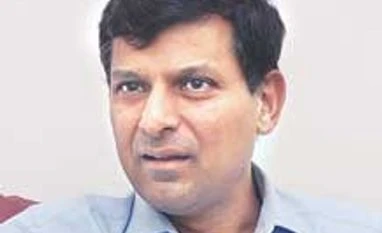 "It's up to RBI to decide on policy rate cut: Rajan")


