Modi should raise outsourcingissue with US, says Bhagwati
Bhagwati reminded Modi that the US system was driven by lobby groups and India needed to voice its concern over the anti-outsourcing sentiment in the US
BS Reporter New Delhi Ahead of US President Barack Obama's visit to India, trade economist Jagdish Bhagwati on Saturday advised Prime Minister Narendra Modi to raise the issue of outsourcing with the visiting dignitary.
At an event here, Bhagwati reminded Modi that the US system was driven by lobby groups and India needed to voice its concern over the anti-outsourcing sentiment in the US. He said many in the US said they didn't know what the Indian community wanted. Therefore, India should make its stand on outsourcing clear, he said.
"Our people should step up (their efforts)...unless we ask for it, we are not going to get it. The American system is driven by lobbies and that matters a lot," he said, adding many in the US thought Indians were taking over their jobs.
"President Obama is coming here and since we are all talking about exports, he (Modi) needs to talk about exports with Obama, which means importing from us," Bhagwati said.
He said the US continuously spoke against outsourcing. "How will you export if there is negative sentiment against outsourcing? Outsourcing is a good word for India; you don't outsource to China, New Zealand and so on." Words against outsourcing built sentiment against India, he said.
Indian software services companies, which earn most of their annual revenue from outsourcing to the US, have been pushing for easier entry rules for their employees to the US.
Last year, after a war of words with Nobel laureate Amartya Sen on growth versus redistribution of wealth, Bhagwati said economic expansion also generated revenues at any given tax rate. "Once you get revenues, you spend them for social causes," he said.
Common sense dictated corporations had to accumulate wealth and then spend on social causes, he added. "You can talk about social responsibility; you can say corporations should do social responsibility. It is practical common sense to do that, to say we have to accumulate wealth and then be able to do social spending," he said.
However, he clarified poverty required intervention beyond growth. "It's a radical strategy; it's not a conservative trickle-down strategy. Growth is not an end in itself, but a strategic instrument." Growth, he said, enabled one to spend in the manner one couldn't otherwise.
Backing the Gujarat model of development, Bhagwati said it was a very practical approach to reducing poverty, where revenue was increased and that revenue was spent on reducing poverty. He said when Narendra Modi was Gujarat chief minister, it had struck him that Modi was a very different politician and a potential prime minister.
With the newly formed NITI Aayog functioning on the lines of cooperative federalism, Bhagwati said to him, this concept meant regionalism, but with a competitive spirit.
Bhagwati's protege, Arvind Panagariya, is the first vice-chairman of NITI Aayog.

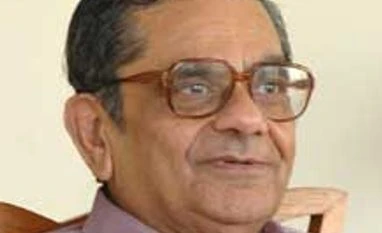 "Modi should raise outsourcingissue with US, says Bhagwati")


 Connect with us on WhatsApp