Excess late rains could hit agri hopes
However, too much rain in the later half might not always be good for crops
Sanjeeb Mukherjee New Delhi The southwest monsoon is likely to reach the country later than usual and gain momentum over the months, but that’s hardly good news for agriculture if the showers are in excess and their distribution skewed.
According to meteorologists, the rains are expected to pick up speed in the second half of June and make steady progress across the country, getting stronger each day. The season lasts till September.
June, being the first month of monsoon, gets 17-18 per cent of the total moisture. So, a delayed start would not have too much of an effect on the total rainfall. July and August get the most showers. In many parts of central and north India, monsoon reaches only in July.
However, a delayed start could mean the current dry weather would continue for some time in many parts of the country. Water levels in the 91-major reservoirs, which dipped to about 18 per cent of their total capacity in the week ending May 19, would fall.
A delayed monsoon that goes on longer than expected is also not good. “Too much rain at the end of the monsoon as well as unseasonal rainfall could lead to flooding. Too little rainfall at crop-critical areas could be equally damaging for agricultural production,” said a Deutsche Bank research report last month.
Also, historical evidence suggests that agriculture growth is typically low in the years that follow La Niña — which was prevalent last year.
“This implies that if we end up with a strong agricultural sector growth in FY17 (5.0-5.5 per cent), this will likely be followed by a weak agricultural sector performance in the next financial year (FY18),” the Deutsche Bank report said.
La Niña is a climatic cycle over the Pacific Ocean that has often helps the monsoon in India.
For the time being, the Union agriculture ministry has pegged the food grain production target at 270 million tonnes for FY17, almost 17 million tonnes more than FY16.
With back-to-back droughts, there is little hope for a bumper crop growth.
The India Meteorological Department (IMD) would come out with its monthly and region-wise monsoon forecast in the first week of June.
Private weather forecasting agency, Skymet, in its updated forecast released Tuesday had also predicted that the rains would gather steam from August onwards and might spill over well into October delaying its withdrawal.
“The monsoon reached Andaman and thereafter there has not been much movement. It is expected to again gather steam around June 6, which is around the time it is expected to reach Kerala coast. Overall, I feel that in the first half of June, the southwest monsoon might remain weak, but gather good steam there onwards,” D S Pai, deputy director general, climatology, IMD, told Business Standard.

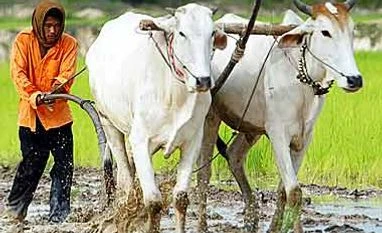 "Excess late rains could hit agri hopes")


 Connect with us on WhatsApp