Life at North Block does not change much for the incumbents with the sudden reshuffle at the top, and especially not for the new finance secretary, Rajiv Kumar. The finance secretary, despite the honorific, has no specific role to play in the finance ministry in addition to his remit as the departmental secretary. At Budget meetings, for instance, it is the views of the respective secretaries that carry the day. And most of the time this means it is the views of the secretaries of expenditure, revenue and economic affairs that, between them, carry the most responsibilities. It is also for this reason that successive finance ministers have pushed their senior most personnel to these departments. The sudden exit of Subhash Chandra Garg as both finance secretary and secretary, department of economic affairs, has unsettled that sequence, since Rajiv Kumar is the secretary of the department of financial services. As of now, if finance minister Nirmala Sitharaman should want to consult him in person, the secretary will have to wing his way to the North Block since his operational office is at Jeevan Deep building on Parliament Street. Quite close but not a walkable distance, certainly. And this situation is unlikely to change till Kumar, an IAS officer of the 1984 batch, retires in February next year.
Between them Kumar, Atanu Chakraborty, secretary, department of economic affairs, and Girish Chandra Murmu, expenditure secretary, have almost similar terms at the finance ministry. Chakraborty retires in April 2020 and Murmu in November this year Kumar, therefore, is unlikely to earn a chance to step into their shoes unless Sitharaman chooses to extend his term. Ajay Bhushan Pandey, revenue secretary, will retire in February 2021.
It is possible that the minister will revive the practice of offering a secretary-level room in the first floor of North Block to Kumar near her office, as was done by P Chidambaram for the first secretary in the reconstituted department of financial services, Vinod Rai. Yet unless this government, which has a penchant for changing the established ways of doing business, assigns a set of specific responsibilities to the finance secretary, duties in the respective departments at the ministry will continue as of now with a new chamber for the new finance secretary.
To be sure, Kumar is not a newbie to the nuances of bureaucracy or the finance ministry. Armed with degrees in zoology and law, plus a post-graduate diploma in public policy, he has been joint secretary in the expenditure department looking after state finances. He was Establishment Officer in department of personnel, a post that decides on all senior most appointments in the government civil service. And he was part of the committee that gave the present shape to Niti Aayog.
One of the key substantive changes that could occur on his watch is in banking. Kumar has been leading the process of recapitalisation of the public sector banks. This will continue but his assumption of the role of finance secretary raises expectations of greater momentum to the process. Banking and insurance reforms has been a key element of the Indian economic landscape and could well acquire more prominence under Kumar. It is not that the former finance secretary was not on the ball, but as the new incumbent, Kumar would be in a position to wield a leadership position in terms of pushing through changes in the financial sector. This will be a welcome development.
Incidentally, though Kumar spells his first name as Rajiv, his service record, including the IAS civil list and the Jharkhand government’s official list of IAS officers in their cadre, spell it as Rajeev. It is an interesting sidelight of the number of variations to which IAS officers with the name Rajiv or its variations resort, and the present finance secretary is no exception to the trend. The officer himself has never said when he had made the change. The markets and the economy, of course, will be looking forward to far more substantial changes than that of signboards in the finance ministry.

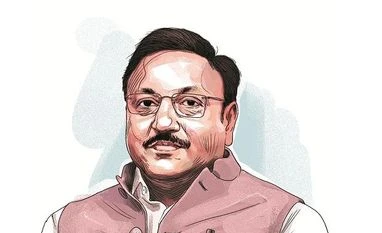 "Rajiv Kumar, finance ministry insider expected to push for reforms")












 Connect with us on WhatsApp