We have learnt to grow despite the challenges: Sunil Bharti Mittal
Interview with Founder and chairman, Bharti Enterprises
Surajeet Das Gupta As one of the first Indian entrepreneurs to gamble on the future of telecom,
Sunil Bharti Mittal, founder and chairman of Bharti Enterprises, has been on a roller-coaster ride in the past two decades. He has negotiated regulatory challenges, taken on tough competitors, and faced financial challenges. But he is still the undisputed king of the mobile telephony market. In an e-mail interview, he tells
Surajeet Das Gupta about the past. Edited excerpts:
When you started out in 1994-95, did you expect the mobile market to become so big? It was clear then everyone had overbid and the industry looked like it would not survive. When we started, we knew mobile telephony had great potential in India. But no one had imagined the kind of growth, scale and transformational impact that mobile services would have on the Indian telecom landscape. The first major inflection point was the introduction of the revenue share regime under NTP-99. It came at a crucial point, as the industry was fighting for survival. It was a bold and progressive policy decision by the government and when one looks back, it really set the industry on its growth trajectory.
The regulatory environment has been a challenge. The other challenge was to get more spectrum. How have you tackled these? Regulation has been a mixed bag for the industry. We have learnt to live with it and grow despite the challenges.... The quantum of spectrum made available to operators here is way below the global average. It is amazing how despite this challenge, operators provide world-class services to the second largest number of mobile subscribers in the world.
The sector in recent years has gone through excessive competition, scams and financial pressure. How do you see the future? The industry is recovering from one of its worst phases, where hyper-competition and regulatory uncertainty battered the balance sheets of operators and hence, overall expansion of telecom services. Telecom is a very capital-intensive business and the financial health of the industry is paramount for it to be able to continue investing in networks. As a consequence, the rates, in particular the realised rates, have to move upwards to allow the industry to get back on its feet.
Do you see the market shifting to data quickly, despite the fact that most companies have not made money after spending a lot on 3G spectrum? Clearly, the momentum has shifted towards data, led by 3G and 4G services, though voice will continue to grow in under-penetrated areas in rural India. Mobile devices will become much more powerful tools and high-speed mobile internet will be a lifestyle enabler, delivering services from banking and commerce to education and health care.
Just as mobiles took voice telephony to the masses much faster than landlines managed to, 3G/4G networks will accelerate India's journey towards becoming a digitally integrated economy. What we have is another massive revolution in the making.
In India, 3G adoption has followed the global trend, which saw a gradual uptake. We are headed in the right direction and as smartphones become more affordable, the uptake of data services will increase. For Airtel, data services are growing at over 100 per cent every year and we expect the trend to sustain.

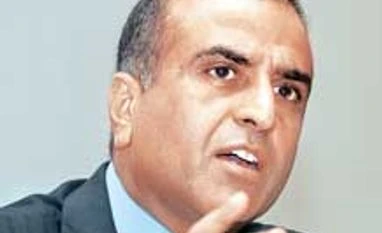 "We have learnt to grow despite the challenges: Sunil Bharti Mittal")


 Connect with us on WhatsApp