We're moving to absolute consumerisation of power: Rajiv Srivastava of IEX

In a Q&A, the MD and CEO of India Energy Exchange dwells on the real time market mechanism in power trading
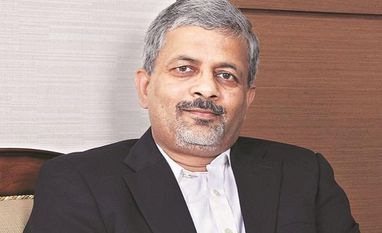
Rajiv Srivastava, managing director and chief executive officer, India Energy Exchange
In the first 48 sessions, our volume was close to 3.4 million units (kilowatt per hour). Every possible power distribution company (discom), open access buyer and independent power producer from across the country have participated, Rajiv Srivastava, India Energy Exchange
Jyoti MukulShreya Jai New Delhi
7 min read Last Updated : Jun 03 2020 | 9:54 PM IST
India's two power exchanges have launched power trading on real time market (RTM) basis. Union power minister R K Singh formally inaugurated the mechanism today, though trading started on Monday. In an interview with Jyoti Mukul & Shreya Jai, Rajiv Srivastava, managing director and chief executive officer, India Energy Exchange, says the next step should be to move to hybrid trading of conventional and renewable power while giving a choice to consumers. Edited Excerpts:

How important is it to have Real Time Market in these times?

What Real Time Market (RTM) does is that it allows people to budget for their fluctuations on a near real-time basis, since people can buy power within an hour of their requirements. We know fluctuation in the electricity sector happens very fast -- every minute it keeps changing. The RTM market allows you to budget for this. So, earlier people would buy electricity within the same day or the next day but now you had to buy power at least two hours in advance. This was being managed through a deviation settlement mechanism, which means when a buyer needs to increase the requirement, he will just overdraw from the grid and as one overdraws, the regulatory authority imposes a certain penalty on you. Now, with RTM coming in, there is no need to overdraw, which means your penal provisions will go down significantly. And, you will still continue to get the same level of service or better service for electricity and you can serve your consumer so much better. So, in a way we do believe that this is a very significant new product that has been launched in the market. 

What was the volume of trading in the debut session?

We are witnessing huge buy-sell on our exchange in this product -- close to 90 participants in the first two days. The prices are extremely attractive, the liquidity is really nice. It supports 24x7 power supply aspiration in a very flexible, efficient and cost-effective manner. In the first 48 sessions, our volume was close to 3.4 million units (kilowatt per hour). Every possible power distribution company (discom), open access buyer and independent power producer from across the country have participated. With more open access buyers coming in, they see merit in such a mechanism. We had NTPC, Sembcorp and a whole range of generators coming, we had discoms from Andhra Pradesh, Karnataka, Odisha, Delhi, Uttar Pradesh, Assam, Chandigarh, West Bengal, Maharashtra and several others. Large open access consumers like steel firms, zinc and iron companies, are coming. 

The lockdown has led to a lot of demand going out of the market and fluctuation with demand picking up now. Do you think RTM is a boon in such a scenario?

RTM is anyway a boon. When the lockdown was announced at the end of March and all of April was under severe restrictions, we saw peak demand drop by almost 35 per cent and base demand drop by about 25 per cent. During that time, the exchange saw a drop of only 6.6 per cent. In May, demand dip was 10-15 per cent but we've had almost a 50 per cent growth in demand (year-on-year). That's actually playing out to the goodness of the exchange. When the overall demand in the country is low, but the supply of the exchange is high, the prices come down and when the prices come down, then there is an opportunity for the distribution companies to open access to consumers to buy more on exchange and save money on their portfolios. 

Demand from industrial consumers has started to show up a lot more, though it isn't as good as we want it to be. As industry and the supply chain of the manufacturing industry starts to catch up, you will find that the demand for open access will come back. But this has got very little relationship with RTM because it thrives on deviations. People either over draw or under draw and they pay penalty. If RTM is not available, only option is keep paying penalty and keep buying.

How does the price in the day-ahead market (DAM) compare with RTM?

DAM trades 150 million units daily on an average. And that is in the range of Rs 2.5-2.7 per unit. Whereas, like I said, the average price discovered on day one on the RTM the market is Rs 1.55 per unit. 

Can you sell green and conventional power on the same platform?

There is no differentiation between green and brown. We are in talks with CERC and the power ministry to set up purely green power trading. The financials of both work differently. Green power so far is coming as 100 per cent PPA-based capacity creation, as opposed to coal, that has 80-85 per cent in PPA and the remaining is flexible. This is bound to change sometime soon. We are working with the ministry to have a green only market and have green TAM and DAM market now.

How do you foresee power demand for this year?

If May is anything to go, demand will only go up from here. April and May were months with most subdued industrial activity. We have a lot of industrial consumers who come and buy on the exchange but even in such times, the exchange requirements have gone up by almost 20 per cent. So the exchange is running at 20 per cent growth year-on-year while the electricity market is down. Right now, the exchange scores on low prices, flexibility to reduce or increase your offtake on an absolutely hourly basis, and flexibility to buy as much as you want to support your 24x7 consumers is something that is coming across very clearly. 

We believe the situation in these two past months will continue to play out for the rest of the year as well even though the industrial activity will take a while to come back to its normal peak levels. My personal prediction is that it will take at least three to six months, depending on the type of industry and supply chain, for normal levels. In that time, the whole electricity demand will be subdued, but the goodness of an exchange will continue to help us just the way it has done in the month of April and May. We don’t see a drop in demand on the exchange.

 What is IEX’s outlook for power sector?

We feel bullish about energy market at macro level because India has a low per capita energy consumption of 1,100 units against 3,400 units, Canada and the US consume 8,000 units. We have a long way to go. Our generation capacity is almost 183 Gw, or twice the peak demand. Our struggle is how do we go ahead and increase consumption in our country. India aspires to become a bigger economic player than it is today, on the back of the power sector. Whether it is manufacturing Make in India, hospitals and communication, people are consuming more electricity. There will be healthy mix of new generators and there will be fulfillment of transmission and distribution network. There is future in hybridisation and providing a choice to people. We are in restrictive regime right now. We are moving towards absolute consumerisation of power and giving in to a way to give choices to everyone. The good thing that this direction of hybridisation and giving choice to people will require a range of technology built on efficient. Reduce T&D losses and make sure. Have effective and efficient systems and people buy from each other. At IEX, we feel good about the fact that we are in the centre of making this technology revolution happen and providing choice to consumers and modernising the system and creating a higher level of effectiveness in the entire chain of power and also bank so that everyone gains from efficiency and we can provide the technology solution. Hopefully that is the way industry will move.

One subscription. Two world-class reads.

Already subscribed? Log in

Subscribe to read the full story →
*Subscribe to Business Standard digital and get complimentary access to The New York Times

Smart Quarterly

₹900

3 Months

₹300/Month

SAVE 25%

Smart Essential

₹2,700

1 Year

₹225/Month

SAVE 46%
*Complimentary New York Times access for the 2nd year will be given after 12 months

Super Saver

₹3,900

2 Years

₹162/Month

Subscribe

Renews automatically, cancel anytime

Here’s what’s included in our digital subscription plans

Exclusive premium stories online

  • Over 30 premium stories daily, handpicked by our editors

Complimentary Access to The New York Times

  • News, Games, Cooking, Audio, Wirecutter & The Athletic

Business Standard Epaper

  • Digital replica of our daily newspaper — with options to read, save, and share

Curated Newsletters

  • Insights on markets, finance, politics, tech, and more delivered to your inbox

Market Analysis & Investment Insights

  • In-depth market analysis & insights with access to The Smart Investor

Archives

  • Repository of articles and publications dating back to 1997

Ad-free Reading

  • Uninterrupted reading experience with no advertisements

Seamless Access Across All Devices

  • Access Business Standard across devices — mobile, tablet, or PC, via web or app

Topics :new power exchange in IndiaIndian Energy Exchangepower supply

Next Story


