Home / Economy / News / Wealth disparity rose six-fold in 17 years, says development study
Wealth disparity rose six-fold in 17 years, says development study
The study talks of widening wealth inequalities at a time when there is speculation in certain quarters about restoring the inheritance tax in the Budget for 2019-20
premium
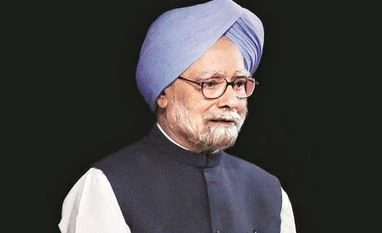
Former PM Manmohan Singh will release the study on Monday
3 min read Last Updated : Jun 23 2019 | 11:25 PM IST
Wealth inequality has risen six times between 2000 and 2017, shows a study to be released by former prime minister Manmohan Singh on Monday.
The study, the Social Development Report (SDR) 2018, prepared by the Council for Social Development (CSD), attributes the inequality to economic liberalisation and the rigid social structure in the country.
When contacted, T Haque, who is one of the co-editors of the report, said: “We will tell the former prime minister that he was the one who initiated economic liberalisation.”
Haque, who was chairperson of the Commission for Agricultural Costs and Prices (CACP), is distinguished professor at the CSD. He said governments implemented entitlement schemes, and yet inequalities grew.
The report, which contains articles on the issue by economists, demographers and social scientists such as Pulin B Nayak, C P Chandrasekhar, N C Saxena (who was also in the Indian Administrative Service), Amitabh Kundu and Haque himself, says that economic growth can be compatible with growing inequality if there are progressive tax policies and adequate social safety nets for the poor.
It talks of widening wealth inequalities at a time when there is speculation in certain quarters about restoring the inheritance tax in the Budget for 2019-20. The tax, prevalent till the 1980s, was abolished by then finance minister V P Singh because it collected a sum that was small when measured against administrative costs associated with it.
The report says inter-state inequality in per capita income has shown an increasing trend since 1991, when economic liberalisation started.
States with a higher per-capita income and better infrastructure experienced higher growth and vice versa.
The SDR also points out that people in metropolitan areas have a high concentration of wealth but Dalits and Muslims are at the bottom of the wealth ladder, and are increasingly pushed to new settlements and outskirts with poor amenities.
It says despite improvement in the growth performance of the Indian agriculture sector from 2 per cent per year in the 1990s to 4 per cent during the period 2004-05 to 2013-14, the economic conditions of farmers have not improved.
The report brings out the paradox of high agricultural deprivation and the poverty of farming communities in states such as Bihar, Jharkhand, Chhattisgarh, and Madhya Pradesh.
Income per worker in the non-agricultural sector was six to 11 times higher than that in the agricultural sector in Bihar, Jharkhand, Odisha, Chhattisgarh and Uttarakhand during the period mentioned above.
At all-India level too, income per worker in the non-agricultural sector was five times higher than that in the agricultural sector during the period, it says.
Though it does not mention the recent deaths of children due to encephalitis in Muzaffarpur, Bihar, the report says India presents several paradoxes in its health system performance. “While its large corporate hospitals (boast world-class) professional talent, (a majority) of Indian population suffer health care-related impoverishment,” it observes.
Huge inequalities in health status are evident across states as well as social, demographic and gender strata, it says.
“(The health care) system in India faces serious challenges of inadequate financial and human resources. Public expenditure on health was stagnant at 0.9 per cent to 1.4 per cent of GDP in the past several decades,” the report says.




