Had C P Joshi, the then Union minister for road transport and highways and railways, not lost from his constituency, Nathdwara, by one vote in the 2008 Assembly election, it might have been hard to decide whether Joshi or Ashok Gehlot, Chief Minister of Rajasthan, would have taken over the reins of the state.
The two are chalk and cheese. Joshi is irascible, blunt and hates being asked for favours. Gehlot is moderate, gentle and unaggressive. They are also not particularly fond of each other. In fact, at a meeting where Gehlot was present, Joshi remarked, soon after the Rajasthan Assembly election in 2008: “I was a follower of Ashok Gehlot. Now I am his collaborator. For each person, he has to decide at some point… The earlier relationship between us was of leader-follower and now it is of leader-collaborator.”
But despite their differences (and they persist), they made a formidable team and scripted victory not just in the Assembly election (96 out of 200) but also in the Lok Sabha (19 out of 25) in 2008 and 2009, respectively.
As Union minister, Joshi was moved out of rural development to replace Kamal Nath in surface transport in 2011. When the United Progressive Alliance (UPA) went into the opposition in 2014, he was given extensive party responsibilities — of nearly a dozen states, small and big, in the Northeast as well as Bihar, West Bengal and the Andamans. Either his new assignment did not interest him, or he felt he had bigger fish to fry. Either way, it was during his watch that Himanta Biswa Sarma left the Congress to join the Bharatiya Janata Party, ostensibly because Rahul Gandhi (now the Congress president) didn’t give him the importance he felt he deserved. Many feel that general secretary in charge, Joshi should have stepped in to stem the damage.
In Bihar, Ashok Choudhary, who was made party chief, quit, not just his position but the party itself when he joined the Janata Dal (United). His Congress pointsperson? Joshi.
Others, too, had a litany of grievances. Speaking to local newspapers, Nagaland Congress chief Kewe Khape Therie said just before the Congress lost the March 2018 elections that the party was going to lose and Joshi was responsible for the loss: He even prevented Congress President Rahul Gandhi from visiting Nagaland. Therie said that in the two-and-a-half years that Joshi was in charge, he visited the state only once. “I think the Congress will draw a blank as of now because party candidates have sailed in an abandoned ship. I don’t think anybody can stand without the support of logistics. I just didn’t like my candidates to resign. So I let them continue but I think nobody wins elections without logistics support,” Therie had said. While the Congress had announced 23 candidates initially, five pulled out for lack of funds, leaving only 18 in the fray.
In Meghalaya, too, the Congress managed to snatch defeat from the jaws of victory. With just two more than the Congress, it was an agile Bharatiya Janata Party that managed to stitch an alliance with smaller groups and form a government. In Tripura, Sarma took advantage of a somnolent Congress to steal the erstwhile allies from under its nose.
The party leadership took its time to act. The charge of the Northeast and West Bengal was taken away from Joshi only in 2018.
Maybe that was a case of putting a square peg in a round hole. But after a silence, the leader made waves again when he said at an election meeting during the Rajasthan elections that Prime Minister Narendra Modi, BJP MP Uma Bharti and Sadhvi Ritambhara hailed from "lower castes" and therefore, knew nothing about Hinduism, adding that it was the Brahmins who had the knowledge.
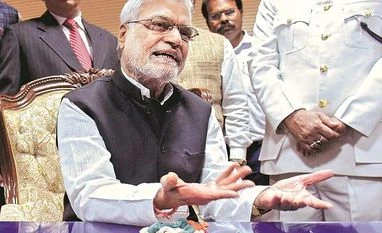
Congress president Rahul Gandhi clarified Joshi’s statement didn't reflect the ideals of the party, urging the senior leader to apologise. He did. And now he has become Speaker of the Rajasthan Assembly, where no doubt, his bluntness will be used to good effect.
Read this article for free
Register to continue reading premium journalism and analysis from Business Standard.

 "Newsmaker: Rajasthan Speaker Joshi's bluntness will be used to good effect")












 Connect with us on WhatsApp