Dream Girl review: A film that tries gender-bending, but falls on its face

It's a plausible and clever premise that builds on the tradition of men playing women to suggest how necessity is also the mother of acting
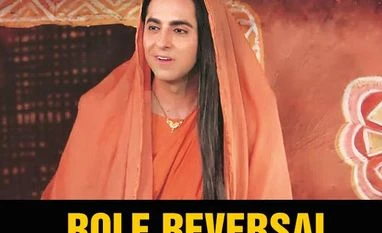
A still from movie Dream Girl
Ritwik Sharma
4 min read Last Updated : Sep 13 2019 | 10:54 PM IST
The trailers of Dream Girl teased us with a compelling prospect of Ayushmann Khurrana — among a select few leading men in Bollywood today who are distinguished by their ability to slip into Everyman roles — conjuring up an “Everywoman”.

Khurrana had a stellar 2018, which landed him a National Award for Andhadhun, so it is not surprising to find him trying to raise the bar here. And true to his promise, he eases into the unusual character of a man who unwittingly seduces men by pretending to be a female caller (that’s part of his job description). Yet, the film is too predictable in its brand of humour and the plot, no matter how batty and improbable either gets, to engage the viewer throughout its undemanding span of just over two hours.

I am, of course, speaking strictly for myself. Knowing that debutant director Raaj Shaandilyaa is a writer who churned out gags for comedian Kapil Sharma did not inspire much confidence.

The content in a TV show like Comedy Nights with Kapil on TV tends to be a mix of slapstick and observations which mostly betray our worst prejudices as a society, and packaged with a streak of unapologetic self-awareness which is endearing to a mass audience.

Dream Girl is an extension of much of the same, and more like a chronological sequence of skits similar to the TV show. It’s yet another small-town story involving Khurrana, to add to films such as Dum Laga Ke Haisha (2015) and Bareilly Ki Barfi (2017). He plays Karam, an unemployed youth in Mathura who is the favourite to act as Sita in the local theatre during Ramleela.

It’s a plausible and clever premise that builds on the tradition of men playing women to suggest how necessity is also the mother of acting. Desperate to find a job, any job, Karam chases an ad to convince the owner (Rajesh Sharma) of a “friendship call centre” of his ability to fit the bill along with the other women who entertain lonely men in search of love. Soon enough, one can anticipate that Karam as Puja will end up wooing men and eventually reveal his double life when things get out of hand.

He hides his secret identity from his widower father Jagjeet Singh (Annu Kapoor), a shopkeeper with loans to pay off, and Mahi (Nusrat Bharucha), the woman who falls in love with him and whom he gets engaged to within the space of a song. But matters come to a head when he realises Puja’s admirers and suitors include an adolescent boy (Raj Bhansali), a familiar constable (Vijay Raaz), his lover’s sworn-to-bachelorhood brother (Abhishek Banerjee), a magazine editor (Nidhi Bisht) who hates men and his own father!

Dream Girl poster
What put me off most was the forced humour, often laden with crude innuendo. In one scene, Karam as Puja puts on yet another act as a burqa-clad woman to dissuade Jagjeet and plays on the worst kind of religious stereotypes to evoke laughter. As if to clarify the film-maker’s position in the next scene, Karam lectures his heartbroken father on the virtues of inter-religious marriage. There’s more in store. Jagjeet has a change of heart, dyes his hair and becomes a Muslim overnight as the jokes continue.

The film ends on a preachy note, as Karam — now enacting Radha in a Rasleela — explains that her act as Puja only revealed how lonely everyone had become at a time when selfies have gained more importance than family portraits.

Even if we ignore a forgettable soundtrack and background score, sticking to a subtle attempt at humour may well have resulted in a heart-warming story (à la Tumhari Sulu starring Vidya Balan). Dream Girl will likely burnish Khurrana’s growing reputation as a versatile actor, but it won’t be his most memorable role. There’s much less in it for the rest of the cast.

One subscription. Two world-class reads.

Already subscribed? Log in

Subscribe to read the full story →
*Subscribe to Business Standard digital and get complimentary access to The New York Times

Smart Quarterly

₹900

3 Months

₹300/Month

SAVE 25%

Smart Essential

₹2,700

1 Year

₹225/Month

SAVE 46%
*Complimentary New York Times access for the 2nd year will be given after 12 months

Super Saver

₹3,900

2 Years

₹162/Month

Subscribe

Renews automatically, cancel anytime

Here’s what’s included in our digital subscription plans

Exclusive premium stories online

  • Over 30 premium stories daily, handpicked by our editors

Complimentary Access to The New York Times

  • News, Games, Cooking, Audio, Wirecutter & The Athletic

Business Standard Epaper

  • Digital replica of our daily newspaper — with options to read, save, and share

Curated Newsletters

  • Insights on markets, finance, politics, tech, and more delivered to your inbox

Market Analysis & Investment Insights

  • In-depth market analysis & insights with access to The Smart Investor

Archives

  • Repository of articles and publications dating back to 1997

Ad-free Reading

  • Uninterrupted reading experience with no advertisements

Seamless Access Across All Devices

  • Access Business Standard across devices — mobile, tablet, or PC, via web or app

Topics :Gender equalitymovie reviewAyushmann Khurrana

Next Story


