India seen breaking ranks with peers on unwinding easy monetary policy

Policy makers will stick to their resolve of keeping their stance easy to achieve the growth goal for now, said economists, including Standard Chartered Plc's Anubhuti Sahay

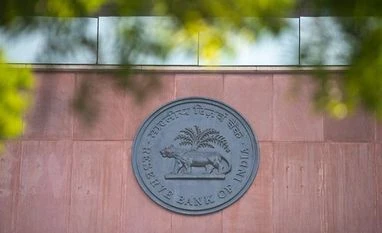
RBI, Reserve Bank of India
Photo: Shutterstock
Subhadip Sircar | Bloomberg
4 min read Last Updated : Dec 29 2021 | 7:01 AM IST
India’s central bank will likely go slow on normalizing its monetary policy settings, breaking step with hawkish global peers to ensure a durable recovery in Asia’s third-largest economy, according to economists.
 
Policy makers will stick to their resolve of keeping their stance easy to achieve the growth goal for now, said economists, including Standard Chartered Plc’s Anubhuti Sahay. They will instead focus on the tricky task of sponging away liquidity, leaving just enough to keep the economy ticking without adding to inflationary pressures.

Reserve Bank of India Governor Shaktikanta Das, who last year called for coordinated policy response to the pandemic, this month cited risks from Omicron for continuing support to the economy despite calls from a colleague for abandoning the accommodative bias. India’s stance is at variance with the hawkish turn at key global central banks from the U.S. Federal Reserve to the Bank of England as they battle inflationary concerns.

“Relative to other central banks, it might seem RBI has neither started hiking nor talking about the possibility of rate increases,” said Sahay, head of South Asia research at Standard Chartered. “We need to consider that such countries did not have strict lockdowns like India or have much higher inflation relative to their historical trend.”

Michael Debabrata Patra, RBI deputy governor and monetary policy committee member, recently cited a flattening Phillips curve -- a theory that plots the relationship between jobs and wages -- to conclude that demand conditions were weak enough to keep policy easy for sometime.

That’s “providing some maneuvering room for monetary policy to support the recovery without being hemmed in by demand-driven inflation concerns,” Patra said, referring to the curve which tends to steepen when employment rises, pushing wages higher and stoking demand-led inflation.

Although the RBI kept its growth projection unchanged at 9.5% for the current fiscal year ending March, it is forecasting a slower expansion of 7.8% next year. It sees inflation peaking in the January-March period before stabilizing in the next two quarters at 5% -- within its 2%-6% target band -- allowing it room to support growth.

Besides, a huge buffer of nearly $650 billion in foreign exchange reserves, gives policy makers the space to insulate an emerging economy like India from the volatility that comes with almost every Fed tightening cycle.

‘Elephant in Room’
Nevertheless, the central bank has been keen to address the huge liquidity overhang in the banking system, which HSBC Holdings Inc. recently described as the “elephant in the room.” Liquidity is likely to remain elevated around the 6 trillion-rupee ($80 billion) mark over fiscal 2023 and 2024, according to projections by the bank, down from around 10 trillion rupees earlier this month.

On its part to rebalance the liquidity in the system, the RBI is migrating the excess cash that banks park with it from the fixed-rate reverse repo to the auction-based variable rates, over which it has better control. Latest data show that banks parked 954 billion rupees with RBI at the fixed rate of 3.35% on Monday, with the central bank planning to migrate most of its liquidity absorption to an auction-based mechanism from January.

As part of that migration, the RBI will aim to mop up 7.5 trillion rupees via 14-day reverse repo on Dec. 31. It shocked markets last week by introducing a shorter 3-day variable reverse repo, further pushing up short-end rates.

The move to apportion more liquidity to VRRR auction could be seen as a precursor to a hike in the reverse repo rate in February, with the key policy rate likely on hold until the third quarter of 2022, according to Bloomberg Economics’s Abhishek Gupta.

“Higher money market rates and an expected hike in the reverse repo rate ahead should be seen as a function of liquidity trending down from the current record surplus, rather than a move by the central bank to tighten policy,” he wrote in a note.

--With assistance from Ronojoy Mazumdar and Rahul Satija.

One subscription. Two world-class reads.

Already subscribed? Log in

Subscribe to read the full story →
*Subscribe to Business Standard digital and get complimentary access to The New York Times

Smart Quarterly

₹900

3 Months

₹300/Month

SAVE 25%

Smart Essential

₹2,700

1 Year

₹225/Month

SAVE 46%
*Complimentary New York Times access for the 2nd year will be given after 12 months

Super Saver

₹3,900

2 Years

₹162/Month

Subscribe

Renews automatically, cancel anytime

Here’s what’s included in our digital subscription plans

Exclusive premium stories online

  • Over 30 premium stories daily, handpicked by our editors

Complimentary Access to The New York Times

  • News, Games, Cooking, Audio, Wirecutter & The Athletic

Business Standard Epaper

  • Digital replica of our daily newspaper — with options to read, save, and share

Curated Newsletters

  • Insights on markets, finance, politics, tech, and more delivered to your inbox

Market Analysis & Investment Insights

  • In-depth market analysis & insights with access to The Smart Investor

Archives

  • Repository of articles and publications dating back to 1997

Ad-free Reading

  • Uninterrupted reading experience with no advertisements

Seamless Access Across All Devices

  • Access Business Standard across devices — mobile, tablet, or PC, via web or app

Topics :Reserve Bank of Indiamonetary policy committeeShaktikanta DasIndian EconomyGlobal economyCentral banks

Next Story




