PNB fraud & more: Nifty PSU Bank sees worst monthly fall in two years

The recent fall has been triggered by the Punjab National Bank fraud, estimated to be worth over Rs 114 billion

PNB
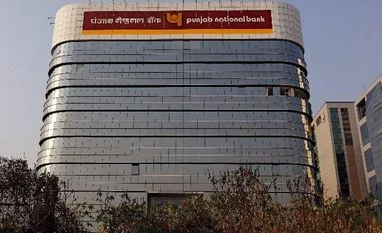
The logo of Punjab National Bank is seen on the facade of its office in Mumbai (Photo: Reuters)
Deepak KorgaonkarPuneet Wadhwa Mumbai / New Delhi
Last Updated : Feb 28 2018 | 10:14 PM IST
With shares of public-sector banks continuing to reel under pressure on Wednesday, the Nifty PSU Bank index posted its sharpest monthly fall in two years.

The Nifty PSU Bank index, the largest loser among sectoral indices, has slipped 16.4 per cent in February. The index fell 2.7 per cent to 2,975 in intra-day trade on Wednesday, but recovered to close nearly one per cent higher at 3,079 levels. By comparison, the Nifty 50 index has lost 4.8 per cent and the Nifty Private Bank index has shed 7.2 per cent in February.

Earlier, in January 2016, the Nifty PSU Bank index had tanked 20 per cent, as against 4.8 per cent decline in the benchmark index and 6.8 per cent fall in the private bank index, show data from the National Stock Exchange (NSE).

The recent fall has been triggered by the Punjab National Bank fraud, estimated to be worth over Rs 114 billion. The scam at the country’s second-biggest public-sector lender comes amid concerns of rising non-performing assets (NPA) in the banking system and slackening credit growth. That apart, reports of cheating/fraud cases at government-run Oriental Bank of Commerce (OBC), Bank of Baroda and Corporation Bank also dented sentiment.

“The PSU banking sector is fighting a perception battle. It is the weakest link in the markets right now. The bad news is just not stopping. As a result, investors are moving to safer places within the BFSI segment. Some money is now chasing private sector banks and insurance companies,” explains Jagannadham Thunuguntla, senior vice-president and head of research (wealth) at Centrum Broking.


PNB worst hit

Among individual stocks, Punjab National Bank (PNB), Bank of India, Bank of Maharashtra, Corporation Bank, Punjab & Sind Bank and United Bank of India hit their respective 52-week low on the NSE on Wednesday. The combined market capitalisation of the 21 listed PSU banks declined by about Rs 760 billion to Rs 4,258 billion during the month.

The PNB stock, the largest loser among the PSU banks, has seen value erosion by 41 per cent to Rs 101 a share from Rs 172 at beginning of the month. The stock is trading near 20-month low at the bourses.

“Given the uncertainty on the potential outcome and the increasing probability of the bank coming under a prompt corrective action (PCA) plan, we maintain reduce rating. In the worst case, the fraud could result in a 23.5 per cent book value write-off. If we factor this in our target price, our fair value estimate would be Rs 73,” wrote Avneesh Sukhija and Karan Gupta of BNP Paribas in a recent note.

Given that the sentiment has turned sour as regards the PSU banks, analysts advise investors to stay away from this space for now and look at their private sector counterparts instead.


“Valuations after the recent correction are at the lower end of the fair-value range. We downgrade PNB to neutral, but retain our buy calls on the other corporate banks under our coverage, including Bank of Baroda, Axis Bank, ICICI Bank and State Bank of India,” says Adarsh Parasrampuria, an analyst tracking the sector at Nomura.

Meanwhile, the Reserve Bank of India (RBI) has unveiled a revised framework for the resolution of stressed assets, scrapped several loan restructuring programmes, asking banks to immediately identify defaults and make disclosures every Friday to the RBI credit registry. 

PSU banks have also been directed to examine NPA accounts of more than Rs 500 million for possible fraud and report any cases of wilful default to the Central Bureau of Investigation (CBI).

The revised framework, experts say, aims at creating a structure for banks to provide early warning signals for stressed accounts and prompt reporting of default.

CARE Ratings sees this as a positive from a long-term perspective. In the medium-term, however, the rating agency warns of a spike in NPA levels over the next couple of quarters.

One subscription. Two world-class reads.

Already subscribed? Log in

Subscribe to read the full story →
*Subscribe to Business Standard digital and get complimentary access to The New York Times

Smart Quarterly

₹900

3 Months

₹300/Month

SAVE 25%

Smart Essential

₹2,700

1 Year

₹225/Month

SAVE 46%
*Complimentary New York Times access for the 2nd year will be given after 12 months

Super Saver

₹3,900

2 Years

₹162/Month

Subscribe

Renews automatically, cancel anytime

Here’s what’s included in our digital subscription plans

Exclusive premium stories online

  • Over 30 premium stories daily, handpicked by our editors

Complimentary Access to The New York Times

  • News, Games, Cooking, Audio, Wirecutter & The Athletic

Business Standard Epaper

  • Digital replica of our daily newspaper — with options to read, save, and share

Curated Newsletters

  • Insights on markets, finance, politics, tech, and more delivered to your inbox

Market Analysis & Investment Insights

  • In-depth market analysis & insights with access to The Smart Investor

Archives

  • Repository of articles and publications dating back to 1997

Ad-free Reading

  • Uninterrupted reading experience with no advertisements

Seamless Access Across All Devices

  • Access Business Standard across devices — mobile, tablet, or PC, via web or app

Next Story




