We intend to use open architecture to build scale: SBM Bank's Sidharth Rath

Sidharth Rath, MD and CEO, spoke to Raghu Mohan on the scale of the bank's ambition and the collaborative approach to rolling out business in its new avatar
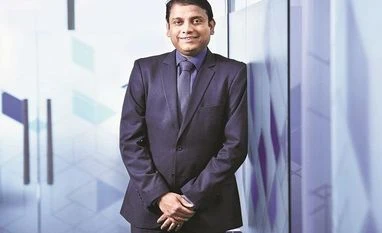
Sidharth Rath, managing director and chief executive officer, State Bank of Mauritius
Raghu Mohan
5 min read Last Updated : Aug 03 2020 | 6:03 AM IST

Don't want to miss the best from Business Standard?

The State Bank of Mauritius (SBM) is among two foreign banks which opted to incorporate locally in the country, the other being DBS Bank. The strategy is to tap into the Indian Ocean-rim economies and connect with the Indian diaspora. With local incorporation, SBM, in regulatory terms, is on a par with homegrown private banks. Sidharth Rath, managing director (MD) and chief executive officer (CEO), spoke to Raghu Mohan on the scale of the bank’s ambition and the collaborative approach to rolling out business in its new avatar. Edited excerpts:

What were the reasons for SBM’s local incorporation?

Mauritius is a pass-through country — money flows through it, though not much is generated within. The domestic market is saturated and there was a need to look beyond it for business. So, a holding company model was put in place five years ago, with SBM under it as part of a strategy to be a player in the Indian Ocean rim across financial services.

The central bank had said it will give foreign banks near-national treatment on local incorporation. Have you seen any signs of it?

Our licence is like that of ICICI Bank or HDFC Bank. I can open branches anywhere I want, except the North-East and Kashmir. We can have 500 or 50,000 branches, as long as we follow the guidelines that a quarter of our branches have to be in rural areas. The statute is the same as that for Indian private banks, but from a regulatory perspective, we are classified under the foreign bank category because of the ownership. It is only that the promoters are foreign, and for that matter, if you see large private banks, they are also up to 74 per cent foreign-owned as well.

If it is so beneficial, how come other foreign banks have not moved ahead on this, other than SBM and DBS Bank?

If you are setting up a company here and putting in capital, then an exit is not an easy option. If you have a branch approach, you can always contract your business. Over the decade, many foreign banks have reduced their branches and businesses. Now, when people talk about long-term commitment (with a branch approach), nobody is sure about it. The capital requirement of foreign banks has gone up. And that’s why they have shrunk or not added capital in India. It’s because of their domestic compulsions — host-country regulators have been insisting on additional capital. It is not only an issue of India being an outlier market for large foreign banks. Capital allocation and application will be more in India, because of its ‘BBB minus’ rating.  

What is the scale of SBM’s ambition and the approach to realising it?

The intent is to set up a full-fledged institution out here in the long term. We are tying up strategically on various fronts, and the way we are intending to build this bank is a bit different. The normal strategy when banks roll out operations is around branches, liabilities and assets. Now, things have changed a lot over the past decade. Some of the new-generation banks have frankly become old-generation, as far as technology is concerned. We have the benefit of cloud technology, and the architecture has become very lean and efficient. We have decided to collaborate with fintechs, which have done a phenomenal job. Look at how Zerodha has disrupted the market. Bank-driven retail broking through subsidiaries has taken a hit, and banks are trying to reinvent it.

Are you going in for a deep and collaborative model with fintechs?

Is there an opportunity for us to use an open architecture? You have fintechs, non-banking financial companies (NBFCs), small finance banks and payment banks. They may have built a value proposition, technology, and a client base, but are not able to 
complete their product suite because they don’t have a banking licence. And they also fear customer cannibalisation by bigger banks. As for these banks, they have lost business to fintechs, but still don’t see them as challengers! I have a brand new technology, starting from core banking. I don’t have to do everything on my own, as it helps me cut down on capital consumption. I don’t have to reinvent the wheel.

Give us a specific instance of such a collaboration.

We have a co-branded credit card with Paisabazaar. It connects you to banks and NBFCs and earns a commission when your loan is sanctioned. But it can’t do anything beyond that. It has more than five crore customers, but is only an integrator. And, these customers are typically millennials. Now, they want to transact using cards. They are willing to put in Rs 50,000 for a card of equivalent value. Paisabazaar gets to sell another product to earn fees. I get to build the liability franchise through small deposits. 

The advantage is that I am a startup, like our collaborators. The mindset matches, and that is very important. They take comfort that I am collaborating, not competing. They also know that I don’t have a network. This comfort is the biggest traction today; and I am very happy to say there is traction in the startup community about this bank.

One subscription. Two world-class reads.

Already subscribed? Log in

Subscribe to read the full story →
*Subscribe to Business Standard digital and get complimentary access to The New York Times

Smart Quarterly

₹900

3 Months

₹300/Month

SAVE 25%

Smart Essential

₹2,700

1 Year

₹225/Month

SAVE 46%
*Complimentary New York Times access for the 2nd year will be given after 12 months

Super Saver

₹3,900

2 Years

₹162/Month

Subscribe

Renews automatically, cancel anytime

Here’s what’s included in our digital subscription plans

Exclusive premium stories online

  • Over 30 premium stories daily, handpicked by our editors

Complimentary Access to The New York Times

  • News, Games, Cooking, Audio, Wirecutter & The Athletic

Business Standard Epaper

  • Digital replica of our daily newspaper — with options to read, save, and share

Curated Newsletters

  • Insights on markets, finance, politics, tech, and more delivered to your inbox

Market Analysis & Investment Insights

  • In-depth market analysis & insights with access to The Smart Investor

Archives

  • Repository of articles and publications dating back to 1997

Ad-free Reading

  • Uninterrupted reading experience with no advertisements

Seamless Access Across All Devices

  • Access Business Standard across devices — mobile, tablet, or PC, via web or app

Topics :SBMICICI Bank Small Finance BanksForeign banks

Next Story



