
Afghan currency slides, prices surge as economic crisis worsens
The market remains volatile, and the devaluation is already impacting Afghans
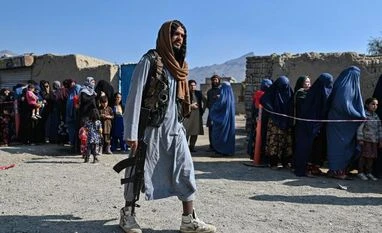 "Afghan currency slides, prices surge as economic crisis worsens")
WebinarsNew
Deep DiveNew
Explore Business Standard
The market remains volatile, and the devaluation is already impacting Afghans
The value of Afghanistan's currency is tumbling, exacerbating an already severe economic crisis and deepening poverty in a country where more than half the population already doesn't have enough to eat.
The afghani lost more than 11% of its value against the U.S. dollar in the space of a day earlier this week, before recouping somewhat. But the market remains volatile, and the devaluation is already impacting Afghans.
Afghanistan's economy was already troubled when the international community froze billions of dollars' worth of Afghanistan's assets abroad and stopped all international funding to the country after the Taliban assumed power in mid-August amid a chaotic U.S. and NATO troop withdrawal. The consequences have been dire for a country heavily dependent on foreign aid.
Afghanistan was also slated to access about $450 million on Aug. 23 from the International Monetary Fund, but the IMF blocked the release because of a lack of clarity about the country's new rulers. Since then, international envoys have warned of a looming economic meltdown and humanitarian catastrophe.
People have no money and the prices have gone up, said Sayed Umid, a 28-year-old shopkeeper selling basic food items such as rice, beans and pulses in a main shopping street in the western Afghan city of Herat.
Since this morning I haven't had a single customer, he said. With rent to pay on his shop and home expenses, he worries he can no longer make ends meet.
Khan Afzal Hadawal, former acting governor of Afghanistan's central bank, said that the sanctions on the Taliban and the freezing of Afghanistan's reserve funds "have put the country's aid-dependent economy on the verge of full economic collapse, leading to historic depreciation of currency.
The development agencies, donors, the international community, the U.S., all these should help in this crisis, he said. We do understand the concerns of the international community but there are mechanisms (that) can help to manage the crisis and to assist the Afghan people.
According to the United Nations' World Food Program, 22.8 million of Afghanistan's 38 million people already face acute food insecurity, and malnutrition in the country is increasing. A combination of the coronavirus pandemic, a severe drought and the Taliban takeover have left many without jobs, and the currency's sliding value has been pushing up food prices.
Shopkeeper Jafar Agha said the price of a large container of cooking oil was about 700 afghanis three months ago (roughly $8 at the time), but now costs about 1,800 afghanis (around $18).
My business has fallen to zero, he said. I'm not selling because people have no money. ... We don't have any hope for the future.
In the bedlam of the Herat Money Exchange market, traders frantically check the ever-changing currency rate on their mobile phones as they jostle through the crowd shouting out prices and waving wads of cash.
A taser-wielding guard keeps the entrance free from the crush, the sound of its sharp clicks enough to send money changers scurrying past into the exchange.
Wednesday wasn't a good day for trader Said Nadir. He sold U.S. dollars at a rate of 105 afghanis, but then bought at 113 afghanis to the dollar as the currency began to slide and he worried it might fall further.
The situation is very bad. When the price increases, we cannot find dollars, he said.
In early August, the afghani was trading at around 80 to the dollar, jumping to around 90 in October. It briefly spiked from 110 on Sunday to 123 on Monday, before recouping somewhat. On Thursday it was trading at around 100 afghanis to the dollar.
For Farzad Haidari, a 34-year-old who imports and sells women's shawls and scarves, the currency fluctuations have wreaked havoc on his business.
Importing many of his goods from neighbouring Iran and with rent on his store in a shopping mall in central Herat set in dollars, he's seen much of his income evaporate. If the situation continues and prices keep increasing, he said, he could be forced to close his shop.
Before, when there was uncertainty because of war, we had our business, he said. Now there is security, but we're losing our business.
(Only the headline and picture of this report may have been reworked by the Business Standard staff; the rest of the content is auto-generated from a syndicated feed.)
First Published: Dec 17 2021 | 2:43 PM IST

