In Pakistan’s Tharpakar desert, Chinese and Pakistani workers toil in the blistering heat to complete the construction of a massive open pit coal mine and an adjacent 660 megawatt power plant four months before schedule. The roadblocks will come soon after.
When Engro Corp., one of Pakistan’s largest conglomerates, which is partnering with China, begins generating electricity from the plant in December it will hit a distribution and transmission network that is essentially “bankrupt,” according to Shamsuddin Shaikh, the chief executive officer of Engro’s energy arm.
“The system has already collapsed, really the system is just existing because the government every few months will churn out some money, dole out some money and the system keeps on working,” Shaikh said in an interview. “Lots of overhauling is required. Distribution needs to be improved, the theft needs to be removed from the system.”
Pakistan, which is facing a financial crisis and may need a bailout, has added half of its power generating capacity in the past five years with Chinese help but a weak distribution network means companies and households are still bereft of electricity. Prime Minister Imran Khan faced immediate complaints after he was elected premier by lawmakers last month when the nation’s largest city Karachi was hit by an all-night blackout. Residents in the metropolis of more than 15 million took to Twitter to vent anger at the local distribution company K-Electric Ltd. and mock Khan’s promise of a “naya” or new Pakistan.
Circular Debt Widespread theft, along with a bloated debt and imbalanced payments system, are the major causes of Pakistan’s electricity challenge. Government-mandated tariffs aren’t high enough to recover costs and subsidies are rarely paid on time, leading to what is known locally as circular debt that has accumulated to about 1.2 trillion rupees ($9.7 billion), according to the finance ministry.
“It’s not possible for anybody to give that money, they have to improve the system,” said Shaikh. “They need to privatize the distribution system, they just cannot go on like this.”
Khan’s government, which is facing a potential bailout from the International Monetary Fund, has pledged to reduce that debt by fixing the aging transmission network and limit distribution losses. His Movement for Justice party said in its election manifesto that it would support the expansion of Engro’s Thar coal project, as well as renewable power generation.
However, Khan’s administration has already ruled out selling its loss-making state corporations after previous governments failed to make headway because of strident unions or financial mismanagement at the companies. Karachi’s K-Electric is Pakistan’s only privatized distribution company and managed to stem outages by implementing a strict billing and collection system since 2008 -- though it still faces challenges from circular debt and an aging grid that has yet to be significantly revamped.
Rising Generation
Engro’s coal power project is part of a wider wave of Chinese-constructed plants across the country raising generation that has helped the nation add 11,000 megawatts in the past five years to combat Pakistan’s continual blackouts. China is financing infrastructure projects worth about $60 billion as part of the Belt and Road initiative and has increased Pakistan’s machinery imports. That has exacerbated Pakistan’s financial crisis as the nation’s current-account deficit continues to widen.
Engro, which was previously owned by Exxon Mobil Corp., is looking to expand in the power sector. The coal project will continue expanding in phases with investments reaching as much as $9 billion by 2024, making it the biggest project in terms of cost while it plans to bid for wind and hydro projects.
“We are seriously looking into those projects,” Shaikh said. “Pakistan doesn’t have a generation problem, it’s more a transmission, evacuation and distribution problem and we at Engro are looking into these things.”

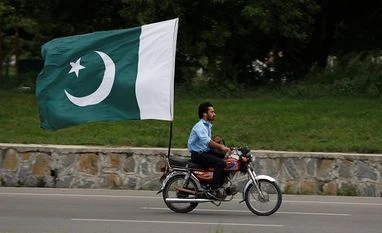 "'Bankrupt' Pakistan grid adds to Imran Khan's economic liabilities")









