Egypt's interim President sworn in, Brotherhood leader arrested
The dramatic exit of President Mohamed Mursi was greeted with delight by millions of people on the streets of Cairo
Reuters Cairo The leader of the Muslim Brotherhood was arrested by Egyptian security forces on Thursday in a crackdown against the Islamist movement after the army ousted the country's first democratically elected president.
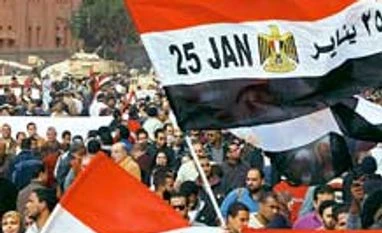
The dramatic exit of President Mohamed Mursi was greeted with delight by millions of people on the streets of Cairo and other cities overnight, but there was simmering resentment among Egyptians who opposed military intervention.
An Islamist coalition led by the Brotherhood called on people across the nation to protest in a 'Friday of Rejection' following weekly prayers, an early test of Mursi's ongoing support and how the military will deal with it.
Perhaps aware of the risk of a polarised society, the new interim leader, judge Adli Mansour, used his inauguration to hold out an olive branch to the Brotherhood, Mursi's power base. "The Muslim Brotherhood are part of this people and are invited to participate in building the nation as nobody will be excluded, and if they respond to the invitation, they will be welcomed," he said.
Just before he spoke, the air force staged a series of fly pasts in the smoggy skies over Cairo, a stark reminder of the military's role in the latest upheaval. The stunt, involving dozens of aircraft, was repeated at dusk.
But a senior Brotherhood official said it would not work with "the usurper authorities". Another of its politicians said Mursi's overthrow would push other groups, though not his own, to violent resistance.
Mursi's removal after a year in office marked another twist in the turmoil that has gripped the Arab world's most populous country in the two years since the fall of Hosni Mubarak.
Investigation opened into Mursi The United Nations, the United States and some other world powers did not condemn Mursi's removal as a military coup. To do so might trigger sanctions.
Army intervention was backed by millions of Egyptians, including liberal leaders and religious figures who expect new elections under a revised set of rules.
Egypt's armed forces have been at the heart of power since officers staged the 1952 overthrow of King Farouk.
The protests that spurred the military to step in this time were rooted in a liberal opposition that lost elections to Islamists. Their ranks were swelled by anger over broken promises on the economy and shrinking real incomes. The downfall of Egypt's first elected leader, who emerged from the "Arab Spring" revolutions that swept the region in 2011, raised questions about the future of political Islam which only lately seemed triumphant. Deeply divided, Egypt's 84 million people are again a focus of concern in a region traumatised by the civil war in Syria.

 "Egypt's interim President sworn in, Brotherhood leader arrested")

