
France going 'childfree' to control over-population, reverse global warming
French nationals are going 'childfree' in order to control overpopulation and reverse global warming as the world's population exceeds 7.8 billion people
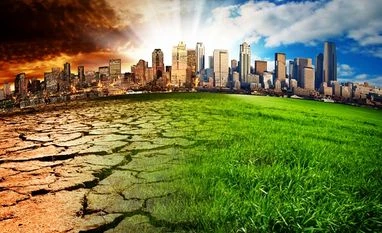 "France going 'childfree' to control over-population, reverse global warming")
WebinarsNew
Deep DiveNew
Explore Business Standard
French nationals are going 'childfree' in order to control overpopulation and reverse global warming as the world's population exceeds 7.8 billion people
French nationals are going 'childfree' in order to control overpopulation and reverse global warming as the world's population exceeds 7.8 billion people.
"Having a child would be totally against my principles. I've never wanted children and am more certain of this decision the older I get," said Manon, 26. "I don't see why I would impose another consumer on this world. In the Western world, we consume more than the resources available," she added, reported France24.
Like Manon, more and more young adults are deciding not to have children for environmental reasons in order to help the planet.
Online they call themselves "childfree" or even "ginks" - short for "green inclinations, no kids" - and they staunchly defend their decision not to have children, reported France24.
World Population Day, which was observed on July 11, serves as another reminder of the world's ballooning population.
"I have absolutely no desire to leave this planet to a child," YouTuber Anna Bogen tells her more than 15,000 subscribers in a video on her channel. "When the planet has no resources left, I'll be six feet under. But if I have a child, they and their children will have to live with it. I don't want to inflict that on anybody."
Denis Garnier, the president of Demographie Responsable (Responsible Demographics), an organisation founded in 2009 to promote a lower birth rate, said that over the past 10 years, talking about not having children has become a lot more common. "Young people are a lot more aware, thanks to the publication of studies about global warming and more public questioning about the destruction of biodiversity," he explained.
A graphic on the organisation's website counts in real-time the number of people alive on earth. The counter steadily ticks upwards. "We're already at 7.8 billion. It's already too much. We will hit 8 billion by 2022 or 2023," says Garnier.
"Overpopulation has major environmental consequences. The calculation is simple: the more of us there are, the more CO2 we emit, and the worse climate change is," said Jean-Loup Bertaux, a Director of studies at the French National Centre for Scientific Research and the author of "Demographics, climate, migration: the state of emergency".
"In France, one less child represents 40 tonnes of carbon saved per year. In comparison, choosing to use an electric car only represents two tonnes saved", reported France24.
Every year, the American NGO Global Footprint Network calculates Earth Overshoot Day, the day when the earth consumes more resources than it can regenerate that year. In 2020, that threshold was reached on August 22.
Those who have chosen to be childfree express anxiety about the future in online videos and comments, but also show a certain kind of defiance towards the previous generation, reported France24.
"I have never known an adult without children. For me, having kids was something mandatory, like getting up to go to school in the morning [...] But we have to ask, what kind of world are we leaving to our kids? I don't know if I want to leave them a world like this," admits Clemence, a 27-year-old YouTuber.
(Only the headline and picture of this report may have been reworked by the Business Standard staff; the rest of the content is auto-generated from a syndicated feed.)
First Published: Jul 12 2021 | 7:14 AM IST


 Connect with us on WhatsApp