Tesla Inc.’s Elon Musk, who’s built up an aura around how automated his car assembly plant will be, has good news for humans: We still need your help.
“Excessive automation at Tesla was a mistake. To be precise, my mistake,” the CEO wrote in a tweet Friday, hours after CBS aired an interview in which he acknowledged putting too many robots in Tesla’s lone auto factory. “Humans are underrated.”
It was a significant concession by Musk, 46, who boasted less than a year ago that Tesla was building a competitive advantage over established automakers by programming robots to quickly produce vehicles. Instead, Tesla has struggled to hit targets for the Model 3, the first sedan the company has tried to mass-manufacture and eventually sell for as little as $35,000.
Excessive use of robots has been one of the factors holding Tesla back from making more Model 3s at its factory in Fremont, California, the chief executive officer said in an interview with CBS This Morning.
“We had this crazy, complex network of conveyor belts, and it wasn’t working, so we got rid of that whole thing,” said Musk, wearing a black Tesla cap and safety glasses.
Analyst Max Warburton saw this mea culpa coming. He was the lead author of a Sanford C. Bernstein & Co. report last month that called Tesla’s belief it could automate most aspects of making the Model 3 a “fallacy.”
“Automation in final assembly doesn’t work,” according to Warburton. “Many have tried it in the past,” including Volkswagen AG and General Motors Co., and failed, he wrote.
German Inspiration
Tesla acquired German manufacturing-technology specialist Grohmann Engineering GmbH in late 2016, and Musk said in February that the unit had designed a new automated system for module production at its battery factory near Reno, Nevada. The line needed to be shipped to the U.S. in March to help boost output of more packs, he said.
Bernstein’s Warburton researched auto assembly plants around the world for an influential Massachusetts Institute of Technology research group before joining the finance industry. He wrote that Tesla’s Grohmann acquisition and use of Kuka AG robots suggests the electric-car maker is inspired by German automation, and portrayed this as ironic.
“German OEMs -- traditionally the most enthusiastic proponents of automation -- have actually been rowing back on it in recent years,” Warburton wrote. “The best producers -- still the Japanese -- try to limit automation. It is expensive and is statistically inversely correlated to quality. One tenet of lean production is ‘stabilize the process, and only then automate.’ If you automate first, you get automated errors. We believe Tesla may be learning this to its cost.”
‘Alien Dreadnought’
Tesla’s engineering team worked on a project code named “Alien Dreadnought” to heavily automate the Fremont factory, which Musk said in October 2016 would result in “really, really crazy” efficiency. He’s also spoken about the company’s manufacturing capabilities as a product unto themselves, describing the plant as “the machine that makes the machine.”
“This is just going to be a very difficult thing for other manufacturers to copy,” Musk said during a May 2017 earnings call. “I would not know what to do if I were in their position.”
In November, Tesla acquired Perbix, a closely held maker of automated machines used for manufacturing, as it was struggling to get Model 3 output going. A week before the company announced the deal, Musk, 46, alluded to how robots were contributing to the slow ramp up.
“With Model 3, either the machine works, or it doesn’t, or it’s limping along and we get short quite severely on output,” Musk said on a Nov. 1 earnings call. By contrast, with the Model S sedan or Model X sports utility vehicle, “because a lot less of it was automated, we could scale up labor hours and achieve a high level of production.”

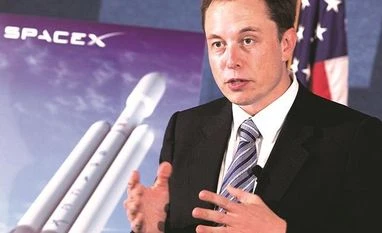 "Humans are underrated, excessive automation at Tesla my mistake: Elon Musk")











