
Indonesia's Mt Semeru unleashes lava river in new eruption today
Indonesia's highest volcano on its most densely populated island released searing gas clouds and rivers of lava in its latest eruption today
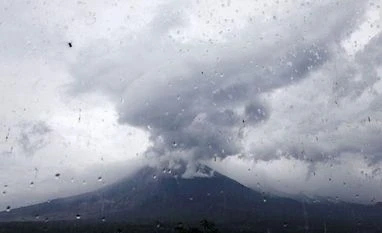 "Indonesia's Mt Semeru unleashes lava river in new eruption today")
WebinarsNew
Deep DiveNew
Explore Business Standard
Indonesia's highest volcano on its most densely populated island released searing gas clouds and rivers of lava in its latest eruption today
Indonesia's highest volcano on its most densely populated island released searing gas clouds and rivers of lava in its latest eruption on Sunday.
Monsoon rains eroded and finally collapsed the lava dome atop 3,676-metre (12,060-foot) Mount Semeru, causing the eruption, according to National Disaster Management Agency spokesperson Abdul Muhari, citing information from the Vulcanology and Geological Hazard Mitigation Agency at the Energy and Mineral Resources Ministry.
Several villages were blanketed with falling ash, blocking out the sun, but no casualties have been reported.
Thick columns of ash were blasted more than 1,500 metres (nearly 4,000 feet) into the sky, while searing gas and lava flowed down Semeru's slopes, traveling toward a nearby river.
People were advised to stay 5 kilometres (3.1 miles) from the crater's mouth, and keep off the southeastern sector area along the Besuk Kobokan river located about 13 kilometres (8 miles) from the crater.
Several hundred people were moved to temporary shelters or left for other safe areas, mostly woman, children and elders, said Joko Sambang who heads the disaster management agency in Lumajang, East Java province.
Semeru's last major eruption was in December last year, when the rumbling volcano erupted with fury and left 51 people dead in villages that were buried in layers of mud.
Several hundred others were injured with serious burns, and the eruption forced the evacuation of more than 10,000 villagers. The government moved about 2,970 houses out of the danger zone.
Semeru, also known as Mahameru, has erupted numerous times in the last 200 years. Still, as is the case with many of the 129 active volcanoes monitored in Indonesia, tens of thousands of people continue to live on its fertile slopes.
Indonesia, an archipelago of more than 270 million people, sits along the Pacific Ring of Fire, a horseshoe-shaped series of fault lines, and is prone to earthquakes and volcanic activity.
(Only the headline and picture of this report may have been reworked by the Business Standard staff; the rest of the content is auto-generated from a syndicated feed.)
First Published: Dec 04 2022 | 1:13 PM IST

