
Russian nerve agent attack: We don't want a new Cold War, says NATO chief
British foreign minister Boris Johnson on Friday stressed the government's "quarrel" was with President Vladimir Putin rather than the Russian people
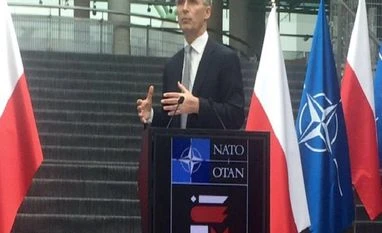 "Russian nerve agent attack: We don't want a new Cold War, says NATO chief")
WebinarsNew
Deep DiveNew
Explore Business Standard
British foreign minister Boris Johnson on Friday stressed the government's "quarrel" was with President Vladimir Putin rather than the Russian people
NATO Secretary General Jens Stoltenberg said on Friday the alliance did not want a return to Cold War hostilities with Russia while expressing support for Britain's strong stance on the nerve agent attack.
He said the targeting of former double agent Sergei Skripal fit a "pattern of reckless behaviour" to which the US-led military alliance had responded, but insisted political dialogue must also continue.
"We don't want a new Cold War, we don't want a new arms race, Russia is our neighbour therefore we have to continue to strive for an improved better relationship with Russia," he told BBC radio.
He noted that NATO allies have in recent years imposed economic sanctions on Russia and deployed more troops in eastern Europe in response to the "changed security situation".
But he stressed: "To isolate Russia is not an alternative."
He added: "At some point Russia will understand that it is in its interests not to confront us but to cooperate with us, and we are ready to do so if they respect some basic norms and rules for international behaviour."
NATO has backed Britain following the March 4 attack in the southwestern English city of Salisbury, which left Skripal and his daughter Yulia in a critical condition.
"We have no reason to doubt the findings and assessments made by the British government, not least because this takes place at the backdrop of a pattern of reckless behaviour by Russia over many years," Stoltenberg said.
British foreign minister Boris Johnson on Friday stressed the government's "quarrel" was with President Vladimir Putin rather than the Russian people.
"Our quarrel is with Putin's Kremlin, and with his decision, and we think it overwhelmingly likely that it was his decision to direct the use of a nerve agent on the streets of the UK, on the streets of Europe, for the first time since the Second World War.
"That is why we are at odds with Russia," Johnson said, during a museum visit in west London alongside his Polish counterpart Jacek Czaputowicz.
Opposition leader Jeremy Corbyn, who has questioned whether the Russian state was responsible for the attack, warned Friday against a "drift to conflict".
Writing in The Guardian, the Labour leader said "a connection to Russian mafia-like groups that have been allowed to gain a toehold in Britain cannot be excluded".
"To rush way ahead of the evidence being gathered by the police, in a fevered parliamentary atmosphere, serves neither justice nor our national security," he said.
Corbyn's leftwing views have in the past drawn criticism of many of his own MPs, and several among them have defied him to back the Conservative government's position.
By Friday morning, 33 Labour MPs had signed a parliamentary motion blaming the Russian state "unequivocally".
Corbyn wrote that Labour was "no supporter of the Putin regime", but added: "That does not mean we should resign ourselves to a 'new Cold War' of escalating arms spending, proxy conflicts across the globe and a McCarthyite intolerance of dissent.
First Published: Mar 16 2018 | 11:16 PM IST

