
The 'Princess Diana story': Why everyone has their own version
Diana was given very little opportunity to be the storyteller of her own life
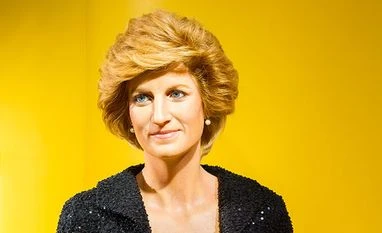 "The 'Princess Diana story': Why everyone has their own version")
premium
WebinarsNew
Deep DiveNew
Explore Business Standard
Diana was given very little opportunity to be the storyteller of her own life
These are all competing versions of “the Diana story”. The fashion icon status depoliticises her life (and death) to reposition her within consumer culture. The documentaries politicise her as a wife, mother and victim.
But who gets to narrate her story? In her life and death, multiple actors have stepped forward. Her former butler, Paul Burrell, wheels out his version whenever someone gives him airtime. Britain’s tabloid press have seemingly (and conveniently) forgotten the way they treated her and accused the broadcaster of Diana, In Her Own Words of exploitation. The monarchy have tried to celebrate her life in the least provocative way possible, using her wardrobe and jewellery. Even her sons, William and Harry, have offered their personal story of what happened in the lead up to her death.
Aside from her famous interview on BBC’s Panorama in 1995, Diana was given very little opportunity to be the storyteller of her own life.
So did the most controversial of the documentaries, Diana, In Her Own Words, do what it promised, and give her a voice? The British broadcaster Channel 4 claimed it did, and in some ways, they were right. The programme’s use of recordings made by Diana’s voice coach, Peter Settelenin, revealed a view of her marriage to Prince Charles which was remarkably blunt and candid. She openly demonstrated negative feelings towards Charles, Camilla Parker-Bowles, and the Queen.
But at the same time, of course, she didn’t have editorial control over the documentary. Director Tom Jennings spliced the clips together into what he deemed a coherent narrative. The large amount of archive footage used as padding in the documentary, as well as the interminably gloomy flute music and sombre narration, acted as anchors of meaning. The programme appeared to manipulate its audience to see Diana as a tragic, doomed, and mistreated figure.
The reaction to Diana, In Her Own Words also raises interesting questions about the royal PR machine. Despite its attempt to sanitise the memory of Diana in a fashion exhibition, it did commission Diana, Our Mother, on ITV – a surprisingly candid documentary for the traditionally emotionless monarchy.
That documentary clearly demonstrates that Diana left her mark on the monarchy. The royal family learnt through her popularity – and their own unpopularity following her death – that adopting a more informal and familiar PR strategy might be useful. The Diana “brand” can be seen in the emotional work undertaken by Harry in his openness about mental health, and William’s public devotion to his wife and children. The cold, hands-off monarchy has been (at least partly) left behind by the younger generation.
But what effect has Diana, In Her Own Words had on the royals? It is interesting to note that a number of senior palace staff – the Queen’s private secretary, assistant private secretary, and Prince William’s private secretary – have all recently resigned.
In a working culture which relies on long-term, steady employment, this is certainly notable, and suggests something must have triggered it.
Royal ramifications
The monarchy has enjoyed a period of remarkable popularity since William and Kate’s wedding in 2011, so it seems unlikely one documentary will derail this. But the public’s reaction to Diana, In Her Own Words must have stirred up some bad memories, particularly for Camilla, who was vilified throughout.
The work Buckingham Palace put into changing public opinion about Camilla was examined in Steve Hewlett’s documentary Reinventing the Royals. In it he described a relentless, strategic attempt to sanitise Camilla’s name in the public imagination. Her wedding to Charles in 2005 was seen as its ultimate triumph – but fresh public support for Diana now has the potential to do irrevocable damage to Camilla’s carefully crafted popularity.
If the documentary did cause Buckingham Palace to panic, the next question for them is how the royal PR machine can attempt to rewrite the Diana story in a way which works for them. William and Harry’s publicised emotional ordeal certainly goes some way towards this, as they are cultivated to be the face of a modern monarchy.
Channel 4’s decision to air the documentary proves Diana is still enough of a pull for media institutions to blatantly defy their carefully cultivated relationship with the monarchy. So is Diana always going to be a threat to the royal image machine? And if so, why? Is it because she reveals something to us about the institutional power of monarchy, and the symbolic violence arguably that goes alongside this? She was clearly vulnerable before, during and after her marriage to Charles, yet seemingly received little or no help from Buckingham Palace. As long as she kept up her work popularising the monarchy for a new generation, she was left to fend for herself.
The real question is whether the royal family – and others – should be allowed to rewrite the Diana story for their own gain. At what point do they rescind the right to make her “work” for them? When she separates from her royal husband? When she’s stripped of her royal title? After she’s dead? And when does her story become her own – and not part of other people’s carefully crafted narratives?
Laura Clancy, PhD Candidate, Lancaster University
This article was originally published on The Conversation. Read the original article.
Already subscribed? Log in
Subscribe to read the full story →

3 Months
₹300/Month
1 Year
₹225/Month
2 Years
₹162/Month
Renews automatically, cancel anytime

Premium stories handpicked daily by our editors


News, Games, Cooking, Audio, Wirecutter & The Athletic
Digital replica of our daily newspaper — with options to read, save, and share


Insights on markets, finance, politics, tech, and more delivered to your inbox
In-depth market analysis & insights with access to The Smart Investor


Repository of articles and publications dating back to 1997
Uninterrupted reading experience with no advertisements


Access Business Standard across devices — mobile, tablet, or PC, via web or app
First Published: Aug 17 2017 | 8:58 AM IST


 Connect with us on WhatsApp