
Buoyed by signs of improving trade relations, oil starts 2020 on a high
Oil was also boosted by optimism that trade talks between the world's two largest economies will support demand
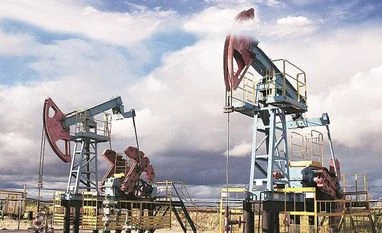 "Buoyed by signs of improving trade relations, oil starts 2020 on a high")
WebinarsNew
Deep DiveNew
Explore Business Standard
Oil was also boosted by optimism that trade talks between the world's two largest economies will support demand
Oil prices rose to begin the new year on Thursday buoyed by signs of improving trade relations between the United States and China which eased demand concerns and rising tensions in the Middle East.
Brent crude futures rose 25 cents to $66.25 a barrel by 0958 GMT, while U.S. West Texas Intermediate (WTI) crude was up 13 cents at $61.19 per barrel.
The U.S. military carried out air strikes against Iran-backed Katib Hezbollah militia group over the weekend. Angry at the air strikes, protesters stormed the U.S. Embassy in Baghdad on Wednesday, although they withdrew after the United States deployed extra troops.
"We do not see a threat to Iraq's crude supply at the moment, other than a small wind down over the first few months of 2020 in line with its OPEC cut agreements," consultancy JBC Energy said.
"Nevertheless, heightened tensions in the region involving Iranian-backed forces may introduce a certain geopolitical risk," they added.
Oil was also boosted by optimism that trade talks between the world's two largest economies will support demand.
U.S. President Donald Trump said on Tuesday the U.S.-China Phase 1 trade deal would be signed on Jan. 15 at the White House.
"We may need to see that economic optimism turn into better data before we see more substantial gains," analysts at OANDA said.
January also marks the scheduled start of deeper output cuts by the Organization of Petroleum Exporting Countries (OPEC) and its partners, including Russia.
The group agreed to cut output by a further 500,000 barrels per day (bpd) from Jan. 1, on top of their previous cut of 1.2 million bpd.
The cuts come as Russia reported record high 2019 oil and gas condensate production of 11.25 million bpd, beating the previous record of 11.16 million bpd set a year earlier, Energy Ministry data showed on Thursday.
A fall in U.S. crude inventories last week also supported prices. U.S. crude stocks fell 7.8 million barrels in the week ended Dec. 27, compared with analysts' expectations for a decrease of 3.2 million barrels, data from the American Petroleum Institute (API) showed on Tuesday.
Official data from the Energy Information Administration (EIA) is due on Friday having been delayed by two days by the New Year's holiday.
In 2020, Brent is forecast to average $63.07 a barrel, up from December's estimate of $62.50, while WTI is forecast to average $57.70 per barrel, up from December's estimate of $57.30, a Reuters poll showed.
First Published: Jan 02 2020 | 3:45 PM IST

