Amid rising worry over slowing economic growth, Nirmal Jain, chairman of IIFL, the financial services group, tells Rajesh Bhayani that slowdown for a quarter or two is a small price to pay for the radical reforms implemented, as these would have a strongly positive impact on economic growth over the next five to 10 years. Edited excerpts:
The economy seems to have slowed with demonetisation and the goods & services tax (GST). How do you justify the high share valuations?
There is a lot of noise about economic slowdown caused by GST and demonetisation. No doubt, there is an impact in the current financial year (FY18). But, what most critics are ignoring is the fact that these radical reforms will have a strong, positive, impact on economic growth over, say, the next five to ten years. Slowdown for one or two quarters is a small price.
Demonetisation has driven savings to financial instruments, away from real estate and gold, which are un-productive investments as they do not create capacity or generate employment. Whereas, savings into financial instruments provides equity capital, which ultimately gets channelised into new capacity, drives growth and employment. However, this impact will be visible only after a lag of a few years.
Similarly, in the case of GST, a reform pending for several decades, it has structurally made the economy more efficient and formal. With GST, evasion of not only indirect but direct tax will become very difficult. The positive impact will have a significant increase in government revenue and decrease in unofficial, unaccounted, business and income. It will result in significantly higher economic growth, most likely from FY19 onwards. One should be patient and wait for the impact of such major reforms to play out. I strongly believe the cacophony about slowdown should not distract the government from the path of reform and development.
Most people think the government will be populist next year as elections get closer.
Compared to its predecessor, this government is likely to be less populist in terms of use of budgetary resources. However, it is likely to be aggressive in spending on agriculture, housing and the roads sector. These measures might appear populist but will definitely have a positive impact on growth as well.
If commodity prices remain low and the monsoon is good, we should see a strong revival in demand and corporate earnings next year, regardless of policy drift in the countdown to election 2019.
How long could corporate earnings remain weak?
Last year everyone was expecting corporate earnings to rebound in FY18. However, because of demonetisation and GST, the revival seems to be delayed by six months. I think corporate earnings will revive in the second half of this financial year. The revival will be the result of recovery in consumer demand, led by lower inflation and lower interest rates (home loans and automobile loan rates, at less than nine per cent per annum, are low by Indian standards) and government allowances increasing by 12-13 per cent from August 2017 with implementation of the pay commission recommendations. Also, there will be a positive impact of the base effect of lower growth in the second half of last year and a good monsoon.
What will be the impact of foreign portfolio investors (FPIs) withdrawing money for better opportunities elsewhere?
FPIs have withdrawn money in recent weeks primarily because they find Indian stock valuations high. Also, with revival of commodity prices, many other economies and their stock markets have become more attractive. However, the flow of domestic money into mutual funds and financial instruments is more than compensating for foreigners’ selling.
Are investors booking profit and moving into real estate, gold?
Not at all. In fact, local investors are moving away from real estate and gold. With regulations like Rera (Real Estate Regulatory Authority), and the shock of demonetisation, unaccounted and cash money flow has reduced. Real estate or gold attracted unaccounted cash, as there is no trail.
When do you see the private capex cycle coming?
I am expecting demand revival in FY18. If that happens we should see revival of private sector capex in FY19.
Which sectors to invest and which to avoid?
The sectors to invest would also depend on the time horizon. One can build a balanced portfolio, as the Indian economy has a great future. Currently, information technology and pharmaceuticals are facing headwinds in their major market of USA, for visa restrictions, regulator issues, etc. Currently, one may invest in consumer discretionary, fast moving consumer goods, private banks, well-run non-bank finance companies, automobile companies, select infrastructure, road and building material companies.

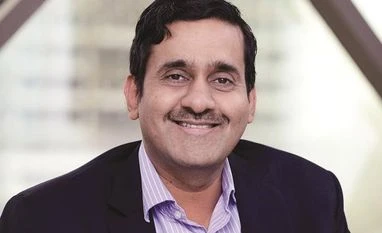 "Corporate earnings will revive in second half of FY18: Nirmal Jain")












 Connect with us on WhatsApp