NSEL stops all e-series trades
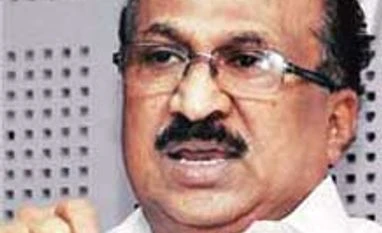
Consumer Affairs Minister K V Thomas says priority is settling investors' dues, will fully empower FMC to resolve the situation
BS Reporters Mumbai/ New Delhi The National Spot Exchange Ltd (NSEL) announced discontinuation in trading e-series contracts on Tuesday, anticipating the government’s move. This has been done even as the government said it didn’t want the exchange to do any trading till all dues were settled.
NSEL offers e-series contracts in gold, silver, copper, zinc, lead, nickel and platinum.
The NSEL spokesperson said, “We did not receive any government order till the time of sending out this release at 6 pm but as an abundant precaution, we did not commence trading in e-series at 10 am. We will check with the authorities and fully comply with a government order.”
The spokesperson said the exchange had advised investors holding stock under e-series that “if they want to convert the commodity into physical form, then the exchange will facilitate this; else, they can also continue to hold the stock in demat form”.
Investors in e-series can also themselves get the commodity converted into physical form and sell it.
The suspension of e-series contracts led to a fall in the share prices of Financial Technologies (of which NSEL is a part) and the Multi Commodity Exchange (MCX), part of the same group, on the bourses. FT fell by 19.7 per cent to close at Rs 159.1 on the National Stock Exchange; the MCX was in the lower circuit of 10 per cent to close at Rs 331.85.
MCX, to distance itself, declared it had no financial commitment or exposure with NSEL, one being a futures exchange and the other a spot one. Both are entities promoted by Financial Technologies (India).
Union consumer affairs minister K V Thomas told the media on Tuesday that the government had also banned trading in e-series contracts at NSEL. It first wanted the exchange to settle about Rs 5,600 crore in dues to investors. The minister said, “The commodity market regulator, FMC, is overseeing the entire matter and the government is in full control of the situation. We will give all the required powers to FMC in this regard.”
The FT Group's chief executive, Jignesh Shah, met the minister on Tuesday, sources said.
Talking to PTI earlier, on whether there would be any punishment for NSEL officials, the minister said: “The law of the land will prevail. Why should we hurry? Are we interested to put somebody in jail or rather ensure settlement of dues to people? Let us see. We have been very careful. We have been watchful. We are not here to create sensationalism; we are here to resolve the crisis.”
On the delay in taking action against NSEL, he said: “Had we asked them to stop trade at that time, the settlement dues would have been huge, say about Rs 21,000 crore. Now, it is Rs 5,000-6,000 crore. We were waiting for the appropriate time.”

 "NSEL stops all e-series trades")


 Connect with us on WhatsApp