Jewellery demand to grow by 10% in 2015 : Report
Over the long term, gold jewellery demand in India is supported by cultural underpinnings in India, evolving lifestyle and growing disposable income
BS Reporter Ahmedabad While jewellery volumes during the calendar year 2014 grew by 8 per cent, it is likely to clock a 10 per cent growth rate during the current year.
During 2014 calendar year, demand started off on a sober note, with a 14 per cent year-on-year (yoy) drop in H1 CY14, where jewellery demand was also impacted by the expectations and uncertainty amongst the consumers on the restrictive measures imposed during the previous fiscal. The improvement in demand during the second half of 2014 (37 per cent volume growth when compared to H2 CY13 and 19 per cent yoy growth during the fourth quarter) was supported by improving consumer sentiments, with the volumes reaching historical high of 662 tonnes, despite H1 being weaker than estimates. Over the near term, credit rating agency ICRA expects improvement in gold availability coupled with the re-introduction of low cost gold metal loans, rising consumer sentiments and aggressive store expansion by organized retailers to drive volume growth. ICRA expects jewellery demand growth to be around 10 per cent during the current year, supported by recent regulatory reliefs for the industry.
Over the long term, gold jewellery demand in India is supported by cultural underpinnings in India, evolving lifestyle and growing disposable income, especially in tier 2 , tier 3 and rural markets which account for a major chunk of the demand. ICRA expects the domestic gold jewellery industry to record robust growth of around 8-10 per cent over the medium to long term, aided by the growing penetration of the organised sector.
The Reserve Bank of India (RBI), during the previous fiscal relaxed all extant restrictions on import of gold and funding for jewellers, including withdrawal of the 20/80 scheme and the re-introduction of metal loans. The relaxation of restrictions provided a fillip to the industry, which was recording lower than expected volumes (during H1 CY14). In terms of supply, imports over the medium term are expected to reach the levels witnessed prior to the curbs, largely replacing sourcing of gold through the unofficial channels or recycled gold.
ICRA's analysis of store level metrics including same store sales growth, EBITDA and revenue per square feet for eight leading players indicates that a majority of these indicators have witnessed a moderation in FY14 and early FY15 (impacted by weak demand sentiments and rising competitive pressures).
However, with the improving demand prospects and easing up of the operating environment, ICRA estimates a growth in the range of 4-8 per cent for several of the aforementioned parameters.

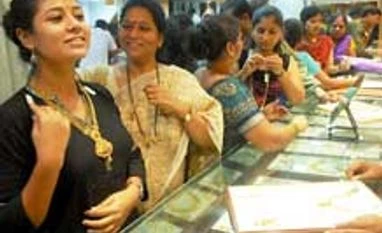 "Jewellery demand to grow by 10% in 2015 : Report")


 Connect with us on WhatsApp