While the widely-tracked benchmark indices — the BSE Sensex and the NSE Nifty — wobbled in the last quarter of FY15, action continues in small- and mid-cap stocks. For investors who love the risk-reward profile of tier-II and III stocks in various sectors, the last financial year was one of the best.
The BSE small-cap index is up 58.7 per cent in the past 12 months, about three times the rise in the Sensex and the Nifty during the same period. The BSE mid-cap index rallied 52 per cent, outshining its bigger peers. On a trailing price-to-earnings multiple, both the indices are more expensive than the benchmark.
“This is typical of a bull-run. In 2007 and 2008, small- and mid-caps were trading at a 40 per cent premium to large-caps but it was corrected subsequently,” says Pankaj Murarka, head (equity), Axis Mutual Fund.
By contrast, some of India’s biggest companies, such as Reliance Industries Ltd (RIL), Cairn India, ONGC, Tata Motors, Gail, NMDC, Sesa Sterlite and NTPC, are among the cheapest stocks in the market currently. RIL’s valuation ratio, for instance, is at its lowest in about a decade, while Cairn India is trading 50 per cent higher than during its initial public offering in 2006.
This has created a valuation gap between large-cap stocks and their small- and mid-cap peers. For example, ITC, one of the top-performing fast-moving consumer goods stocks in the past decade, is now the cheapest stock in the segment, with a 12-month trailing price-to-earnings multiple of 35.8, while those for Hindustan Unilever and Gillette India are 56.1 and 199, respectively.
In the automobile segment, Tata Motors and Bajaj Auto are two of the cheapest stocks, trading at a fraction of the valuation ratios of Eicher Motors and Atul Auto, a Gujarat-based three-wheeler maker focused on the rural and semi-urban markets in north, west and east India.
In the cement segment, small regional players such as JK Lakshmi Cement, Ramco Cement and Shree Cement have richer valuations than those of their national peers such as ACC, Ultratech Cement and Ambuja Cement.
The same is true for the financial services and banking segments. Mortgage company Housing Development and Finance Corporation has a lower valuation ratio than entrants such as Repco Home Finance and its own subsidiary, Gruh Finance, too. In the private sector banking sector, HDFC Bank is trading at a lower price-to-earnings multiple than Kotak Mahindra Bank and has barely managed to maintain a premium over IndusInd Bank.
Some fund managers are worried, saying valuation comfort is declining in mid-caps. “It’s not a bubble yet but there is froth in many mid-and small-cap counters. I would advise investors to be cautious about any incremental investment in mid-caps and small-caps,” says Murarka.
At such high valuations, small- and mid-caps stocks could come under heavy selling pressure if the market turns choppy due to poor corporate earnings or global shocks such as a rate rise by the US Federal Reserve. “When stocks correct from such high valuations, it might take years for investors to recoup their losses, as had happened to many mid-caps in the previous bull-run. I advise investors to stay way from mid-caps and play a recovery story through large-caps,” says G Chokkalingam, founder and chief executive of Equinomics Research & Advisory.
Experts say large-cap stocks provide good downside protection and these are likely to be resilient during a downturn.
“Though the bull-run is here to stay, the direction of the market through the next six months is uncertain, given so many domestic and global events on the horizon. In this scenario, large-caps provide a better risk-reward ratio than richly valued small- and mid-caps,” says Chokkalingam.
Others sense market manipulation in many of these mid-cap counters. “Most of these richly valued stocks have small free-float (non-promoter shareholding) and most of it has been cornered by operators. Now, they get whatever price they want; it has nothing to do with the company’s fundamentals,” says an analyst.

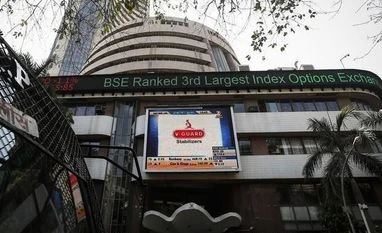 "Many large-caps are now the cheapest stocks")


 Connect with us on WhatsApp